5 MIN READ
04-27-2026
What Is “Ghost Gear” and Why Is It One of the Ocean’s Biggest Threats?
Cathleen P. Montano
While plastic straws and water bottles dominate the headlines, a deadlier threat silently drifts beneath the surface. But some of the most dangerous plastic waste is not floating on the surface. It is drifting beneath it, tangled across reefs, wrapped around marine life, and continuing to kill long after it has been abandoned.
It is called ghost gear, and it is one of the deadliest forms of ocean plastic pollution.
What Is Ghost Gear?
Ghost gear refers to abandoned, lost, or discarded fishing equipment that remains in the ocean. This includes fishing nets, lines, traps, ropes, cages, and other commercial fishing materials.
The name comes from what it does.
Even after it is no longer controlled by a fishing crew, this gear continues to “fish.” It drifts through the ocean, traps marine animals, damages habitats, and breaks down into smaller plastic particles over time.
Unlike a plastic bottle or bag, ghost gear is designed to catch marine life. When it is lost or abandoned, that danger does not disappear. It continues around the clock.
How Does Fishing Gear End Up in the Ocean?
Ghost gear enters the ocean in several ways. Some of it is lost accidentally during storms, rough seas, or strong currents. Some are cut loose when lines, nets, or traps become tangled with other gear. In other cases, damaged or unwanted equipment is deliberately dumped at sea.
Illegal, unreported, and unregulated fishing also plays a role. Some operators abandon gear to avoid detection, leaving behind nets and lines that continue to harm marine ecosystems long after the boats are gone.
The scale is staggering: an estimated 1.2 billion pounds (600,000 tons) of fishing gear enter the ocean every year, a global pollution problem that is difficult to see but impossible to ignore.
Why Ghost Gear Is So Dangerous
It never stops fishing.
A lost net does not know it is lost.
It can continue trapping fish, sea turtles, dolphins, sharks, seabirds, and whales for years. Animals caught in ghost gear often drown, starve, suffocate, or die from exhaustion while trying to escape.
This process is called ghost fishing, and it is one of the most devastating effects of abandoned fishing equipment.
It is built to last.
Most modern fishing gear is made from nylon and other synthetic materials created to survive harsh ocean conditions. That durability is useful during active fishing, but once the gear is abandoned, it becomes a long-term threat.
Some forms of fishing gear can persist in the ocean for hundreds of years. During that time, they continue to entangle wildlife, drift across habitats, and slowly break apart into smaller pieces of plastic.
It destroys critical habitats.
Ghost gear does not only harm animals. It also damages the places they depend on to survive.
Heavy nets and lines act like underwater bulldozers, dragging across fragile coral reefs and seagrass beds, snapping structures that took centuries to grow. Traps and cages can pile up on the seabed, smothering ecosystems and disrupting habitats that took decades or even centuries to form.
For coastal communities that rely on healthy fisheries, the damage is not just environmental. It can affect food security, local livelihoods, and the long-term health of marine resources.
It becomes microplastic pollution.
Over time, ghost gear begins to break down. But it does not truly disappear.
Instead, it fragments into microplastics that can be ingested by fish, seabirds, turtles, and other marine life. These particles can move through the food chain and eventually make their way back to people through seafood, salt, and water.
Ghost gear starts as abandoned fishing equipment. Left in the ocean, it becomes a long-term plastic pollution problem.
The Numbers Are Alarming
Ghost gear is one of the largest and most harmful contributors to marine debris.
It is estimated to make up a major portion of the Great Pacific Garbage Patch by mass, with fishing nets and gear among the most visible and destructive debris found in the area.
The impact on wildlife is severe. Each year, ghost gear is linked to the deaths of seals, sea lions, whales, sea turtles, seabirds, sharks, and countless fish. Some animals are killed directly through entanglement. Others suffer injuries that make it harder to swim, feed, migrate, or reproduce.
And because much of this gear is hidden beneath the surface, the true scale of the damage is likely even greater than what we can measure.
What Is Being Done About Ghost Gear?
Around the world, cleanup organizations, divers, fishing communities, researchers, and conservation groups are working to remove ghost gear before it causes more harm.
Some teams recover abandoned nets from reefs and coastlines. Others work with fishing communities to collect damaged gear before it is discarded. There are also growing efforts to improve tracking systems, strengthen fishing regulations, support better disposal options, and develop biodegradable alternatives to traditional fishing gear.
But removing ghost gear is difficult work.
It can be heavy, tangled, dangerous, and deeply embedded in marine habitats. It often requires trained crews, boats, diving equipment, safety protocols, and proper disposal systems once the gear is brought back to shore.
That is why consistent, funded cleanup operations matter.
How 4ocean Helps Remove Ghost Gear
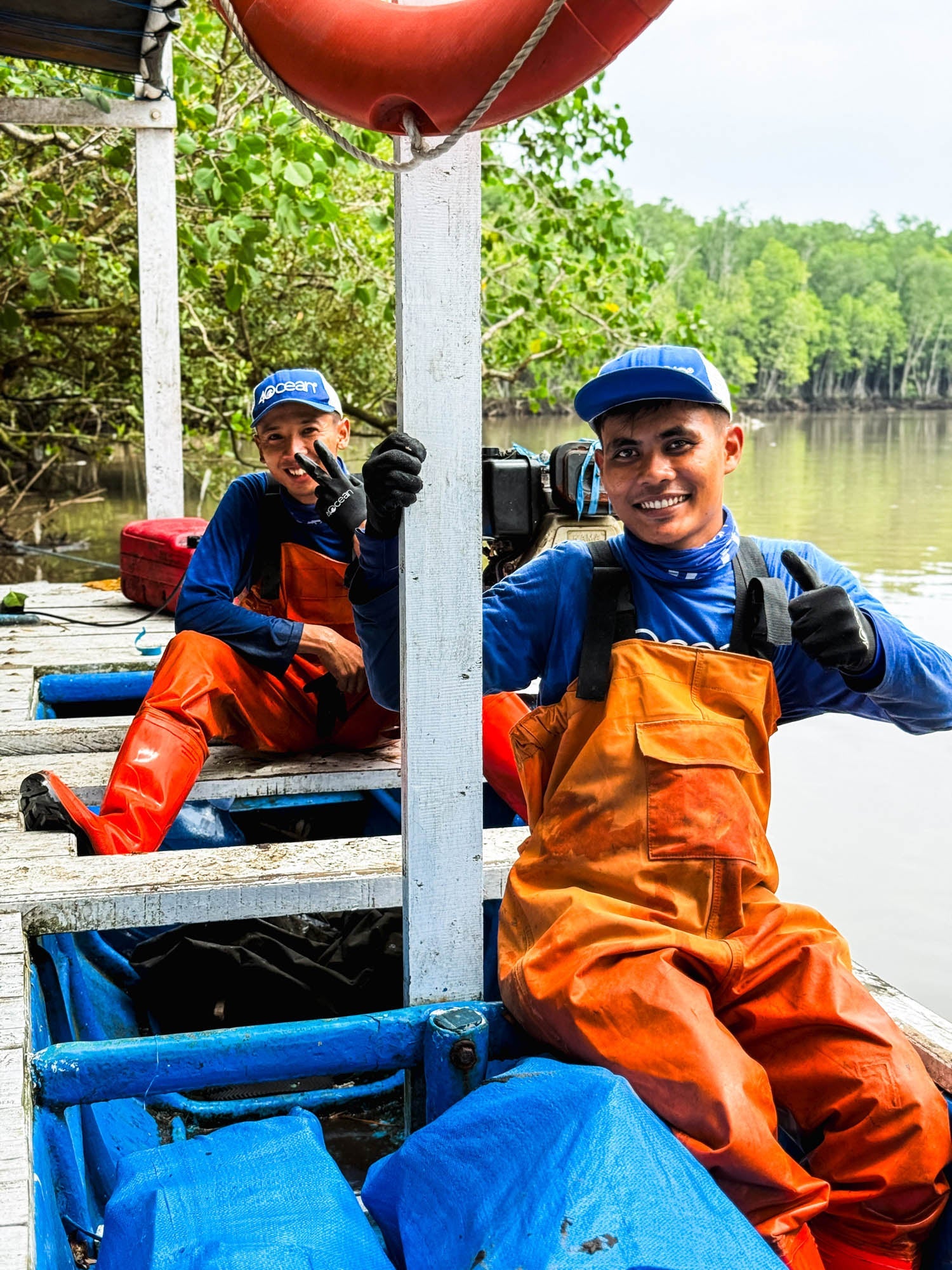
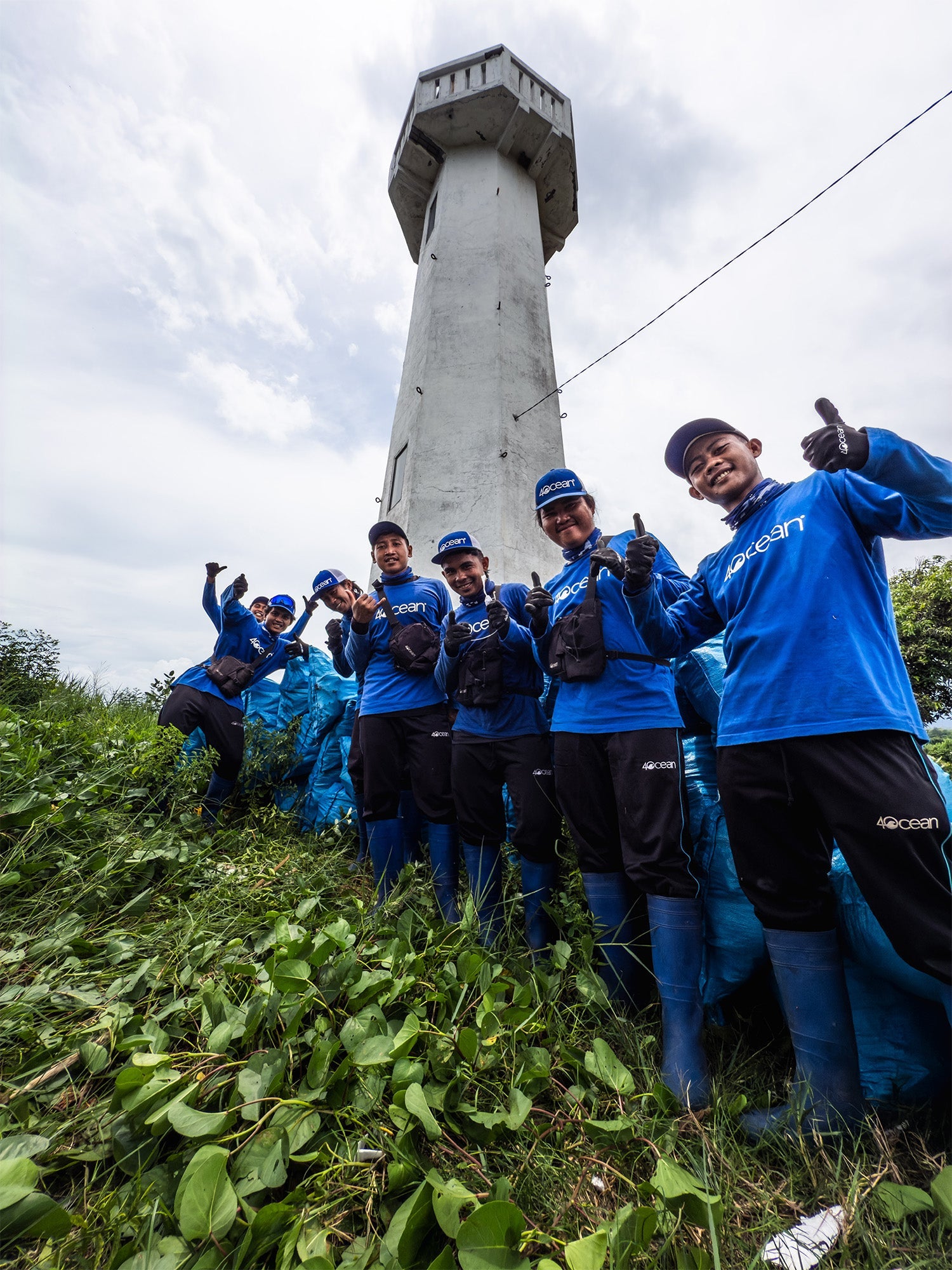
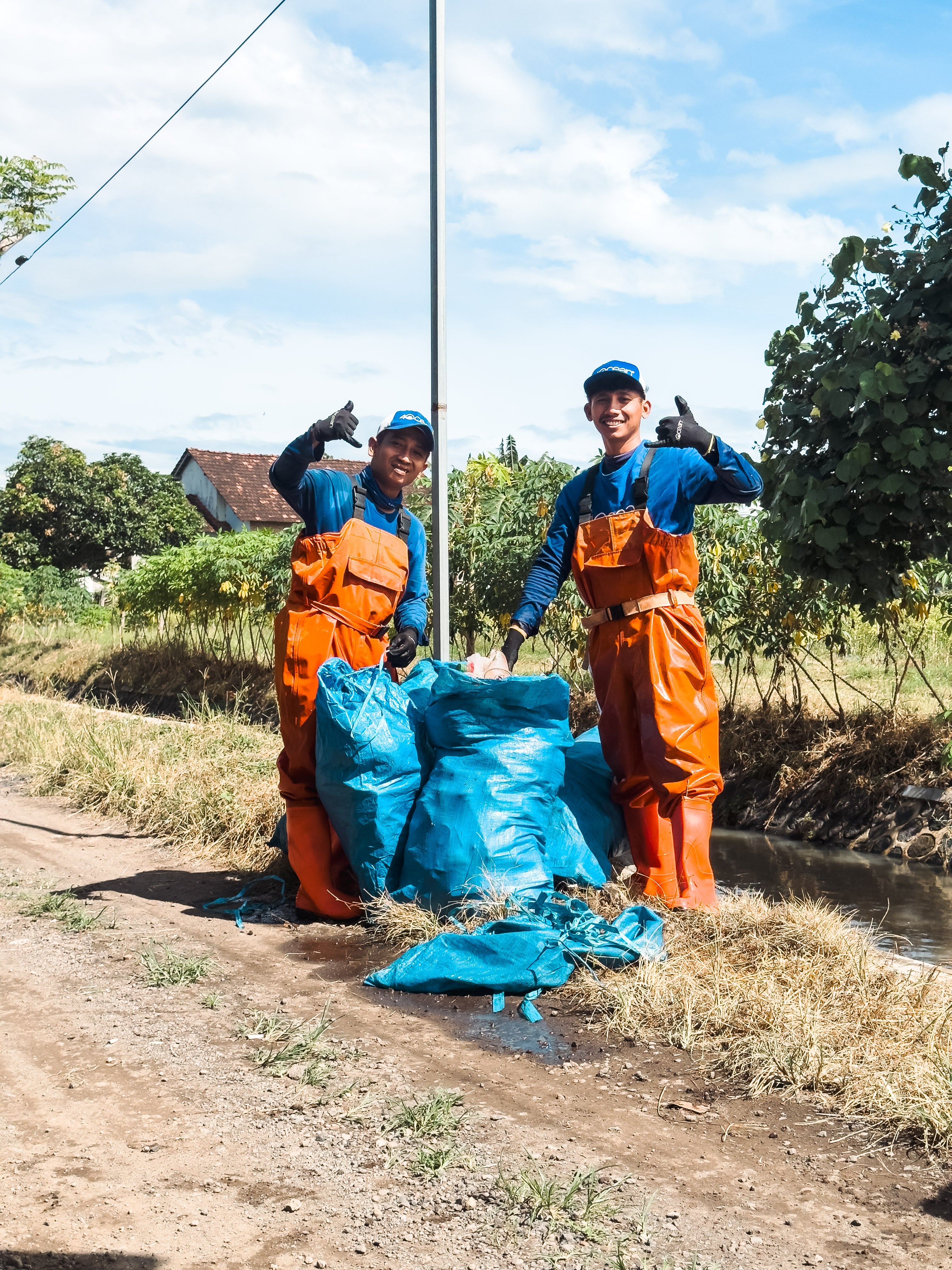
Ghost gear is a priority for 4ocean. Our professional cleanup crews specifically target these abandoned nets and lines across oceans, rivers, and coastlines. Our crews are out in the field removing plastic waste before it can cause more damage. That includes abandoned fishing nets, ropes, lines, traps, and other debris that threaten marine life and coastal ecosystems.
Every pound removed matters.
A pound of ghost gear pulled from the water is a pound that will not entangle another sea turtle. It is a pound that will not wrap around a dolphin. It is a pound that will not drag across coral reefs, break down into microplastics, or continue ghost fishing for years to come.
This is what real ocean cleanup looks like: daily work, measurable impact, and a commitment to removing plastic from the places it should never be.
How You Can Help
Ghost gear is a massive problem, but it is not hopeless. Every person, brand, and community has a role to play.
You can support organizations that actively remove ghost gear and ocean plastic. You can choose seafood certified by sustainable fishing programs. You can reduce single-use plastic in your own life. You can join local cleanup events, share information, and help more people understand that ocean plastic is not just bottles and bags.
Most people have never heard of ghost gear. That needs to change.
The more people understand the problem, the more pressure there is on industries, governments, and consumers to take action.
Ghost gear is a silent killer. But silence is exactly what allows it to continue.
Join the Movement
Every 4ocean product helps fund real ocean, river, and coastline cleanups. Visit our 4ocean Partnerships page to learn how your brand can join our authentic sustainability movement.
When you support 4ocean, you are helping remove the plastic waste that threatens marine life, damages ecosystems, and pollutes our blue planet. From ghost gear to single-use plastic, every pound pulled is one less pound harming the ocean.
Shop Now | See Our Impact | [Join a Cleanup Event]