5 MIN READ
04-27-2026
Mission to Free the Trianggulasi River from Microplastics
Dika, 4ocean Jembrana Content Correspondent
The Trianggulasi River has long served as a lifeline for wildlife in Alas Purwo National Park, linking inland ecosystems to the sea. But during this cleanup mission, the 4ocean Java River Team confronted a growing crisis spreading through every layer of that ecosystem: microplastic pollution embedded throughout the river and along its banks.
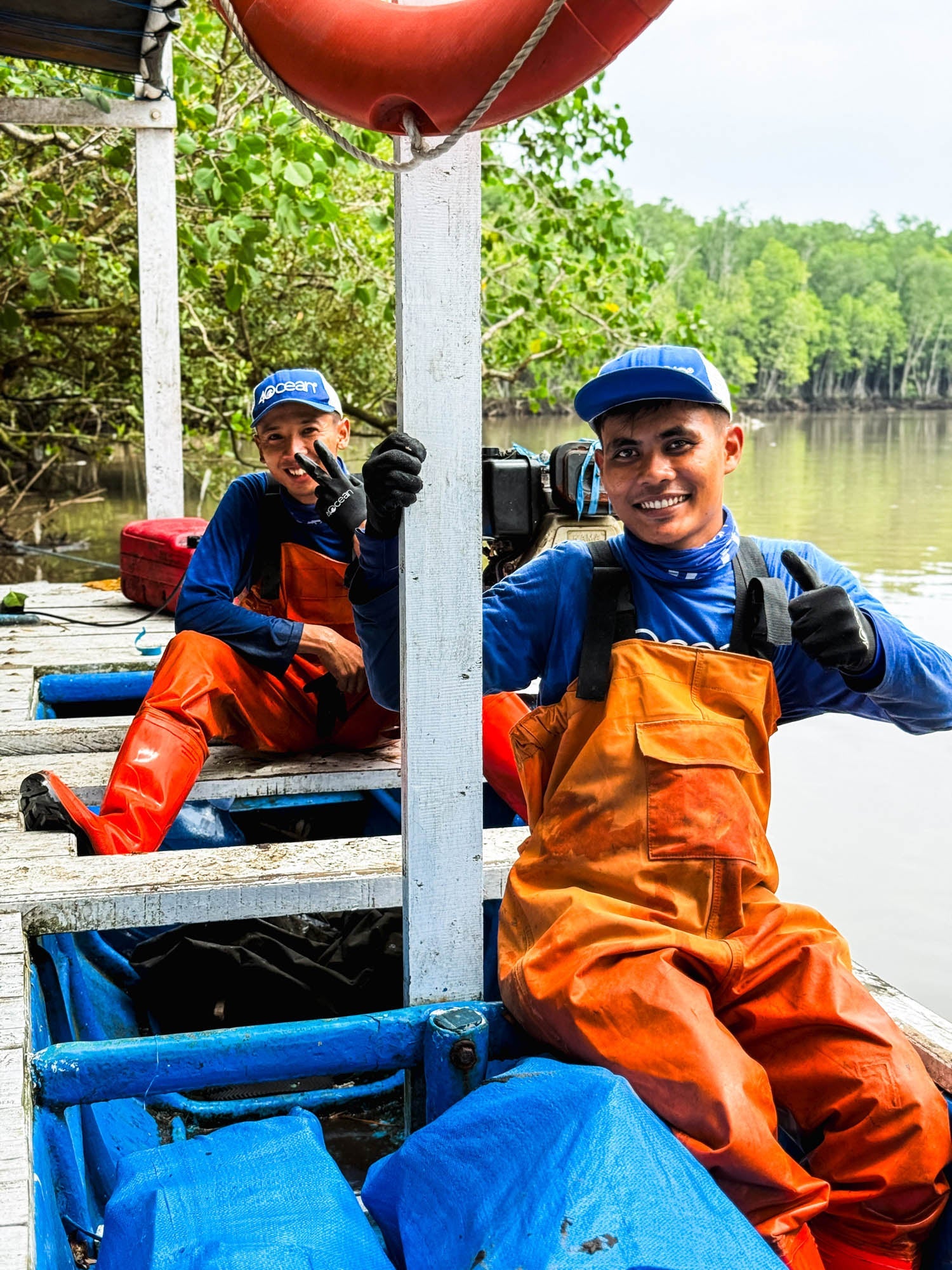
Led by Prayoga Setiawan, the team mobilized early, preparing cleanup tools and protective gear before making the 50 minute journey to the river. What awaited them was sobering. Microplastic fragments were scattered throughout the water, mixed among larger debris and woven into the river’s natural flow.
Unlike conventional cleanups focused on large, visible waste, this mission demanded a different kind of effort. The pollution here was smaller, more pervasive, and far more difficult to remove.


Because sections of the river were shallow, the crew could wade directly into the water to reach debris trapped in the flow. They moved slowly and methodically, collecting tiny fragments alongside larger items such as sandals, plastic cups, Styrofoam, and other waste.
Each handful of microplastics required patience. Each sack filled represented painstaking work.


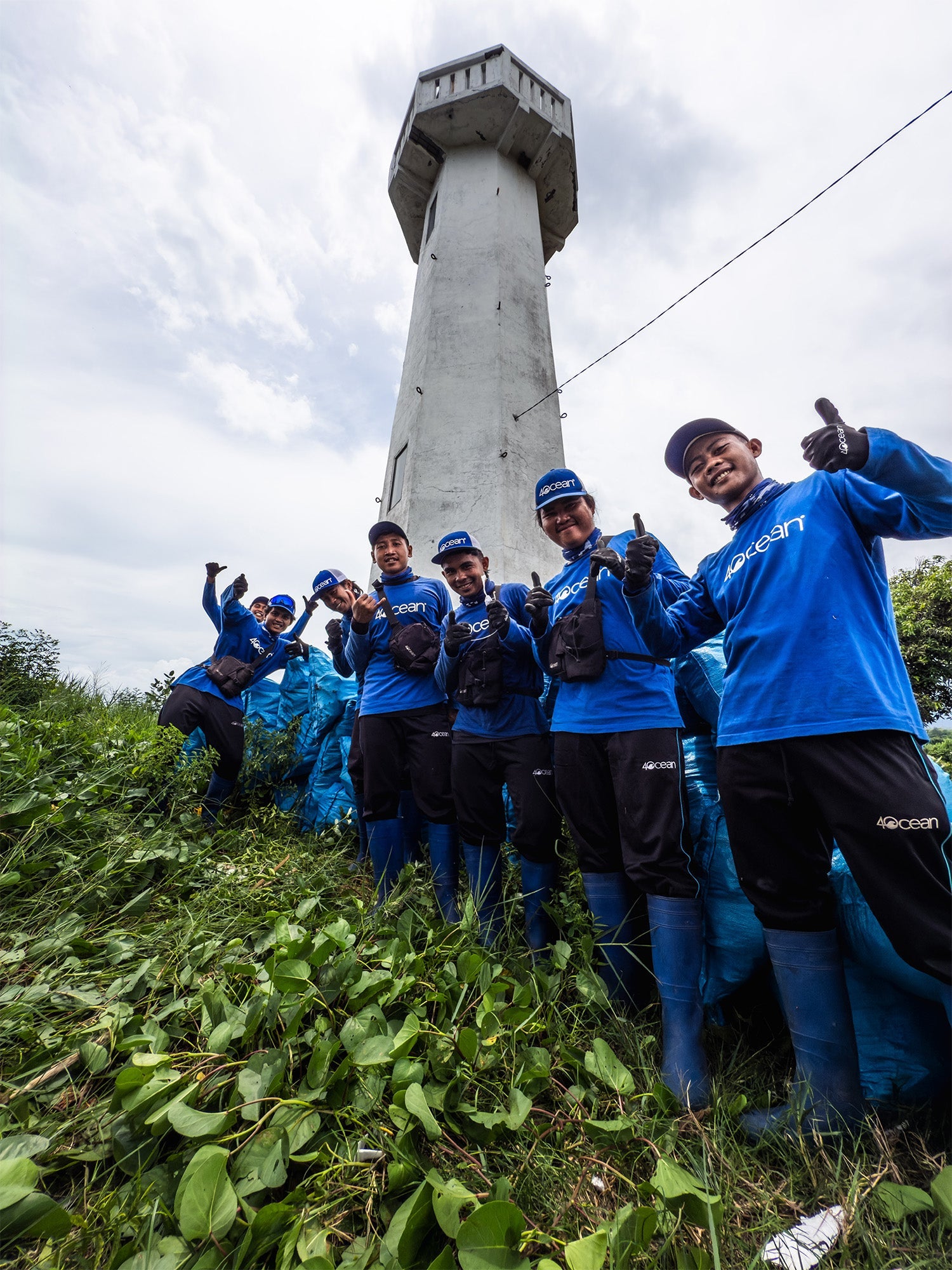
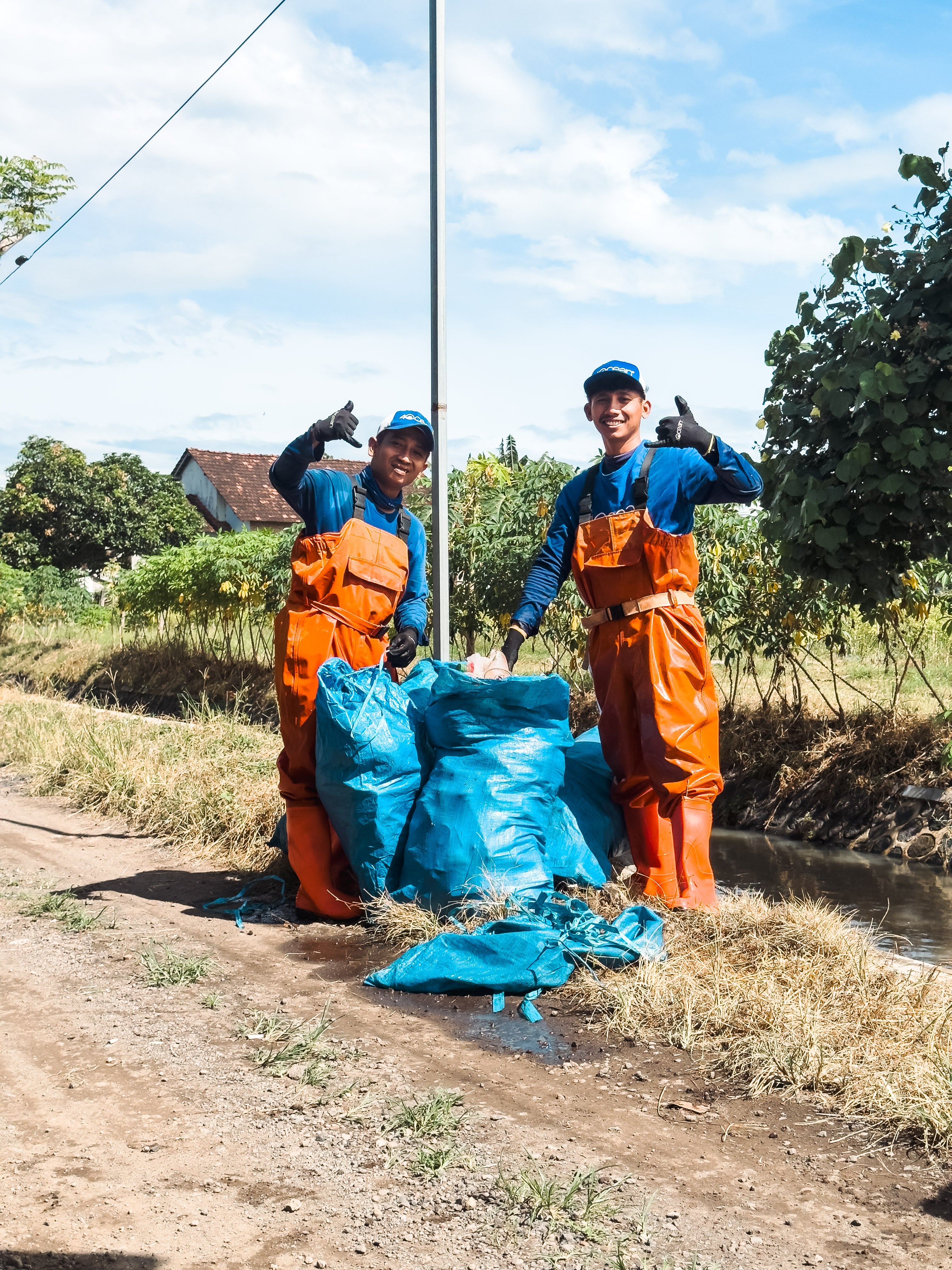
After hours in the river, the team gathered the collected waste for weighing. By the end of the day, they had removed 47 sacks totaling 1,060.1 pounds of plastic waste, much of it made up of microplastics.
Yet this mission came with a difficult realization. The scale and distribution of the pollution meant the cleanup could not be completed in one day.
“Seeing the condition of the Trianggulasi River today is a stark warning for all of us,” said crew member Hendrik Prastyo. “Our mission is far from over. We will return. We will not stop until this river can breathe again.”
That unfinished nature gives this story its weight.
This was not a cleanup that ended with full resolution. It ended with commitment.
Microplastics demand extraordinary precision and time to remove. Unlike larger debris that can be lifted in moments, these particles hide in sediment, drift with the current, and spread through habitats almost invisibly. The team knew progress would require repeated return missions.
And still, every pound collected mattered.


The Trianggulasi River is more than a waterway. It is an artery connecting land, ocean, and wildlife. What happens here does not stay here. Pollution in the river becomes pollution at the coast. What enters upstream eventually reaches the sea.
This cleanup also points to a larger truth. Microplastic pollution is not created in isolation. It reflects broader challenges in waste management, the prevalence of single use plastic, and the consequences of habits far beyond this river.
But the team’s work offers another truth as well.
Change can begin with consistency.
With every return to this river, every sack filled, and every fragment removed, restoration becomes possible.
Because sometimes protecting an ecosystem is not about finishing the mission in a day. It is about refusing to abandon it.