5 MIN READ
08-14-2025
Real Footprints: Cleaning a River Between Fields and Homes
Ahmad Fasta, 4ocean Indonesia Content Correspondent
Early in the morning, under clear skies and calm waters, the 4ocean Jembrana team launched their kayaks at Kaliakah Dam. Situated between rice fields and residential areas, this dam functions as a water catchment for irrigation—and unfortunately, also for trash. Plastic bags, food wrappers, and bottles flowing downstream from nearby villages collect here, forming dangerous buildups that threaten both aquatic life and the people who depend on the river.


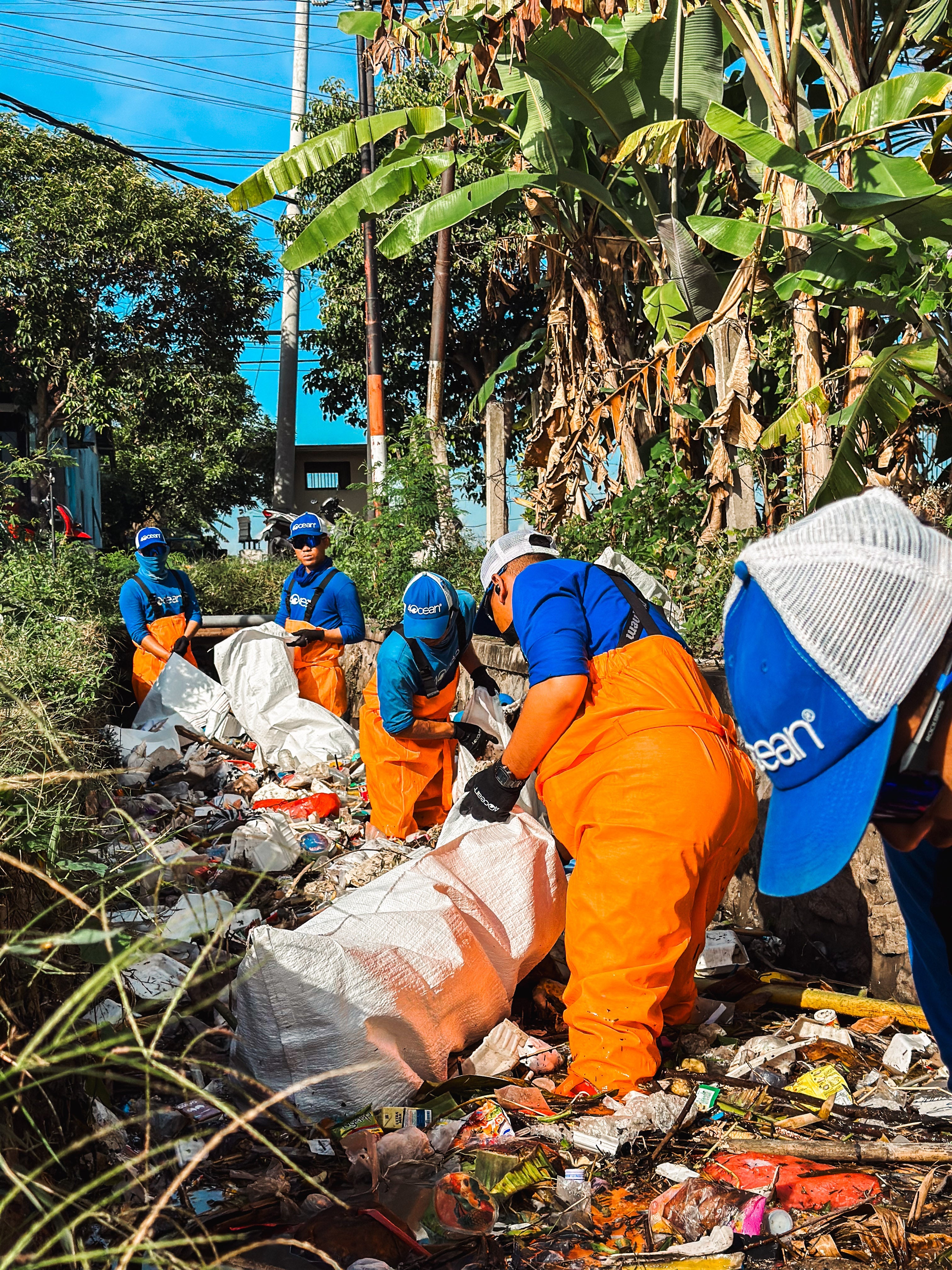
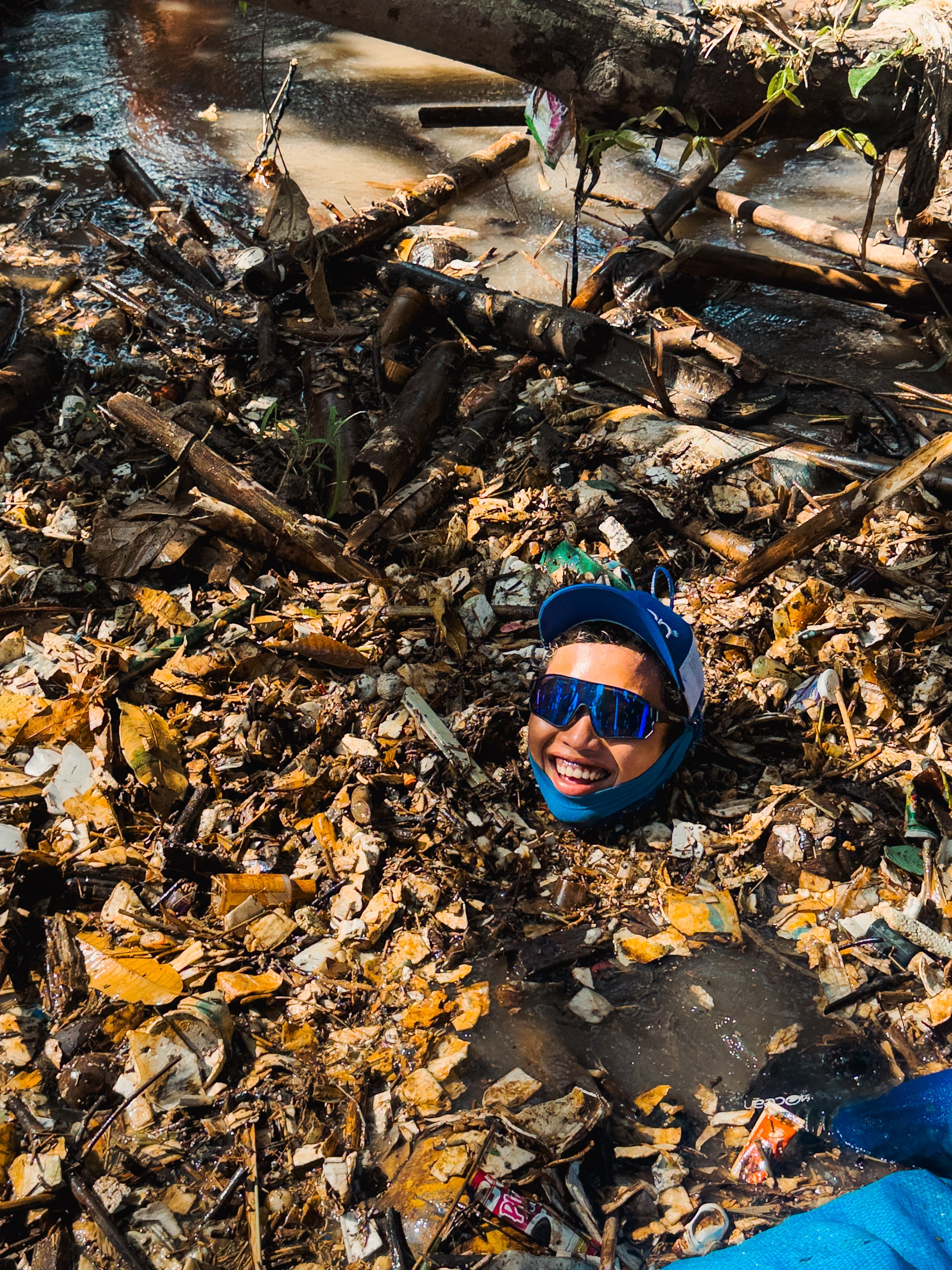
Equipped with kayaks, paddles, gloves, and large sacks, the team divided their roles. Some paddled out to collect floating debris, while others stayed onshore to receive, sort, and manage full bags. The process was repetitive but effective: gather, unload, sort, repeat. At times, the crew had to pause and wrestle with plastic tangled in branches, or endure the foul odor of decomposing waste. As the kayaks grew heavier with each bag, maneuvering through the narrow flow became increasingly difficult.


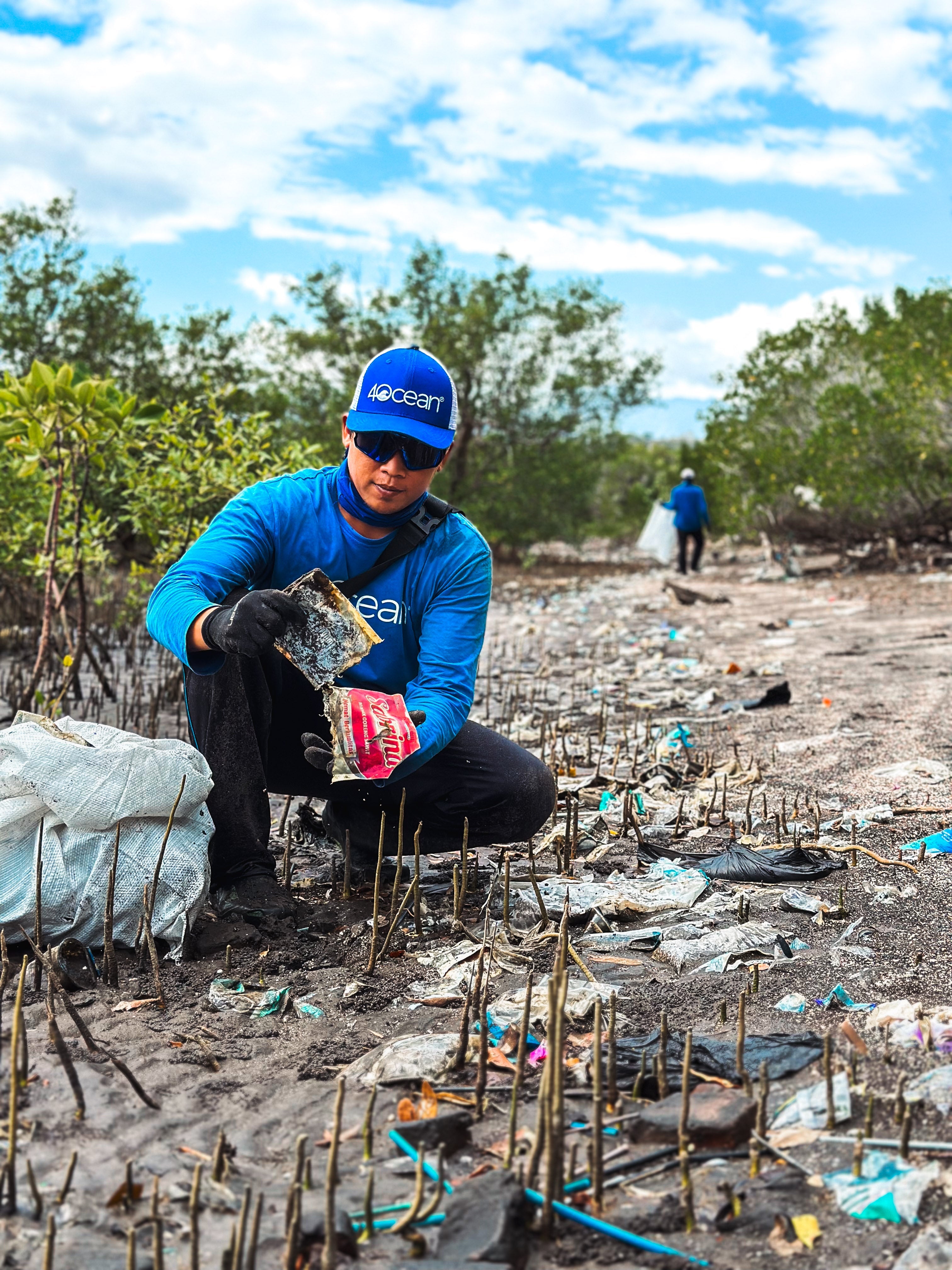
After hours of persistence, the results were clear: 184.95 pounds of trash removed from the river. The most common finds were single-use plastics—instant noodle wrappers, PET bottles, snack sachets, styrofoam chunks, and plastic straws. Organic debris like bamboo pieces and dry leaves also filled the sacks. What once looked like a choked, stagnant stretch of river began to breathe again.
The environmental impact of these efforts reaches beyond the dam. Plastic waste floating on the surface could have easily continued downstream into the ocean, while submerged debris risked blocking the flow and triggering floods during the rainy season. Clearing it not only improves water quality and habitat for fish, but also helps protect nearby communities.
By the end of the cleanup, the team felt both exhaustion and pride. Seeing rows of filled trash bags lined along the riverbank became a tangible reminder of the difference small, consistent actions can make. As one team member reflected:“When we see the river cleared, even just for today, we know that real change starts with teamwork. Each bag lifted is proof that we can protect both nature and our community if we act together.”
The challenges remain constant—plastic tangled in roots, waste carried in daily from upstream, the heat of the sun, the smell of decay. But so does the determination. For the 4ocean crew, every kayak launched into the river is a promise: to keep fighting pollution at its source, to protect the waterways that feed both land and sea, and to ensure that the rivers flowing through our communities remain lifelines, not landfills.