5 MIN READ
07-19-2025
Saving the Flow, Saving the Fields
Ahmad Fasta, 4ocean Indonesia Content Correspondent
It started with a routine riverboom check—and a warning. Our team had spotted trash piling high at a canal boom, a barrier designed to trap waste before it could flow into nearby rice fields. But recent rains had raised the water level fast, and the boom was starting to lose its grip. Trash was spilling over, slipping underneath, and threatening to choke the very system that keeps farmland alive.
This canal isn’t just a ditch—it’s a lifeline. The water that moves through it irrigates rows of rice paddies, making it vital to both the land and the people who live off it. With some of the boom submerged and the current growing faster by the hour, we knew the situation couldn’t wait. Our 4ocean Indonesia team jumped into action.


Once on site, we quickly assessed the damage. The boom was full, and trash had spread far into the canal. Farmers had raised concerns before—worried that too much waste slipping past the barrier would clog the channels, flood fields, or cut off the water altogether. That day, we were there to stop it.
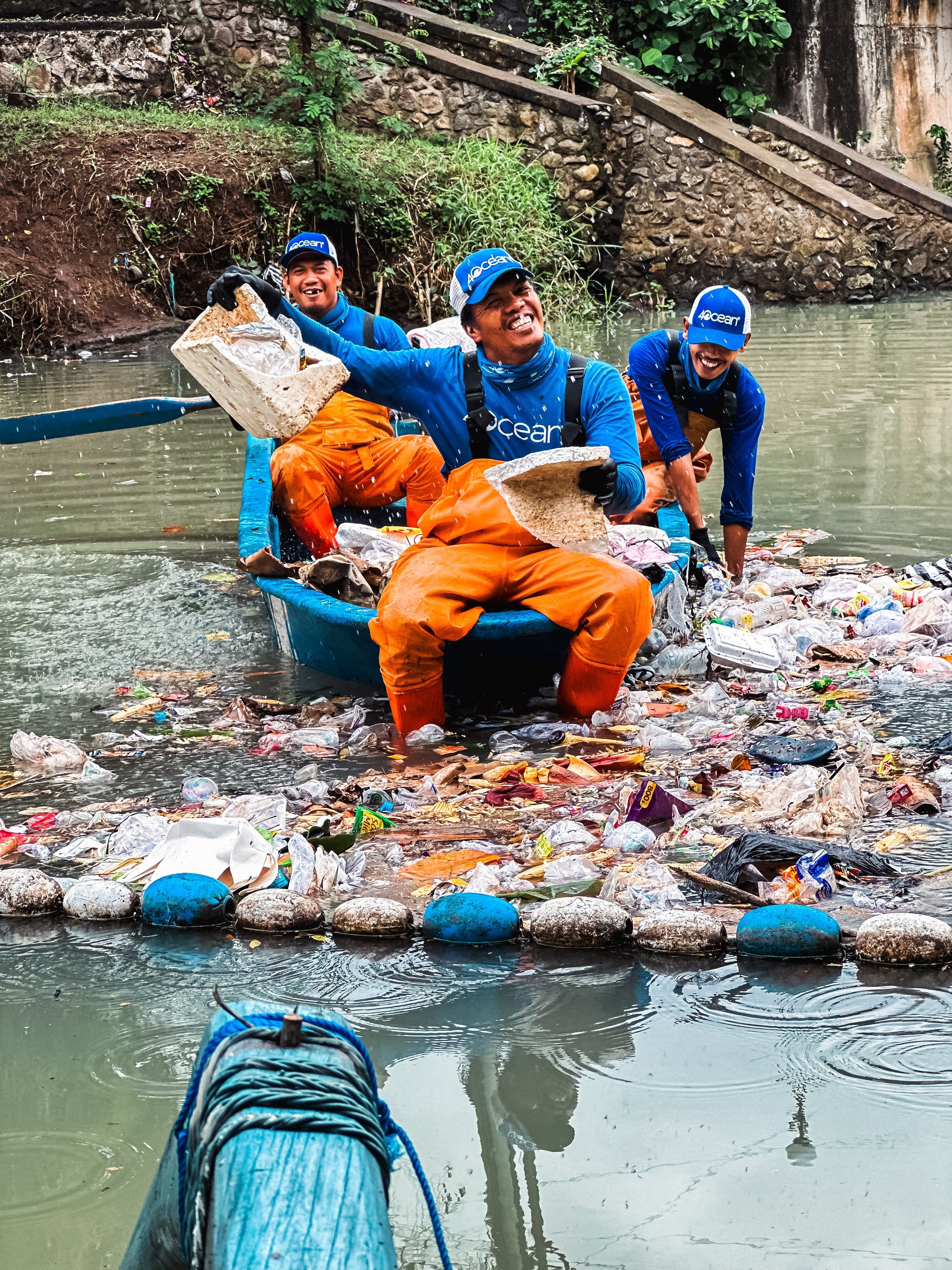
Two of our crew members stepped directly into the thick, muddy canal—gloves on, boots sinking, focus locked in. They pulled up everything from tangled plastic bags to broken buckets and bamboo sticks stuck in the silt. Up on the bank, the rest of the team kept things moving: hauling up sacks, sorting trash into plastics and organics, and keeping the workflow tight. The canal flowed directly into the Ijo Gading River—a fast-moving waterway that leads straight to the sea. Without intervention, all of that trash would’ve been ocean-bound.


By the end of the cleanup, we had pulled 1,886.5 pounds of waste from the canal. Plastic bags, PET bottles, cups, old textiles, even discarded dolls—there was no shortage of surprising finds. But the real weight wasn’t just physical—it was the environmental load we were lifting from the farmers and waterways downstream.
As we worked, the sense of purpose ran deeper than the mud. “This isn’t just about picking up trash,” one crew member said. “It’s about protecting the land that people rely on.” Beneath the sweat, sludge, and the sharp stink of rotting waste, there was quiet pride. The kind that comes from knowing your effort—however gritty—helps ensure cleaner water, healthier crops, and a more balanced ecosystem.
The toughest part? The organic debris. Slimy, decomposing, and thick with rot, it tested both our gloves and our resolve. Navigating the canal’s muddy floor made things even harder. Every step was a slow, cautious dance to avoid injury while staying focused on the mission.
This stretch of canal feeds several active rice fields and plays a critical role in local food production. If it floods or dries out, the damage is immediate. That’s why cleanups like this aren’t just necessary—they’re urgent. With the rainy season around the corner, keeping waterways clear becomes even more vital. Left unchecked, that trash doesn’t just vanish—it returns, through the flooded fields, through broken irrigation systems, and ultimately, through the rivers that pour into our oceans.
There’s also something to be said about what happens in between the labor: spontaneous chats with local residents who stopped to watch, ask questions, or thank the crew. These little moments matter—they turn a cleanup into a conversation, a task into a movement.
Efforts like these may not look glamorous, but they’re the real frontline of environmental protection. Every sack pulled from a canal is one more disaster prevented—and one more promise kept to the land, the farmers, and the future.