5 MIN READ
04-02-2026
Restoring the Setail River Supported by Sony Electronics Inc.
Dika, 4ocean Jembrana Content Correspondent
A few days after flooding hit Purwoharjo, the aftermath told a familiar story. Waste carried by rising waters had settled along the Setail River, clogging its flow and threatening nearby communities. In response, the 4ocean Java River Team mobilized quickly, with support from Sony Electronics Inc., whose partnership continues to strengthen rapid-response cleanup efforts like this one.
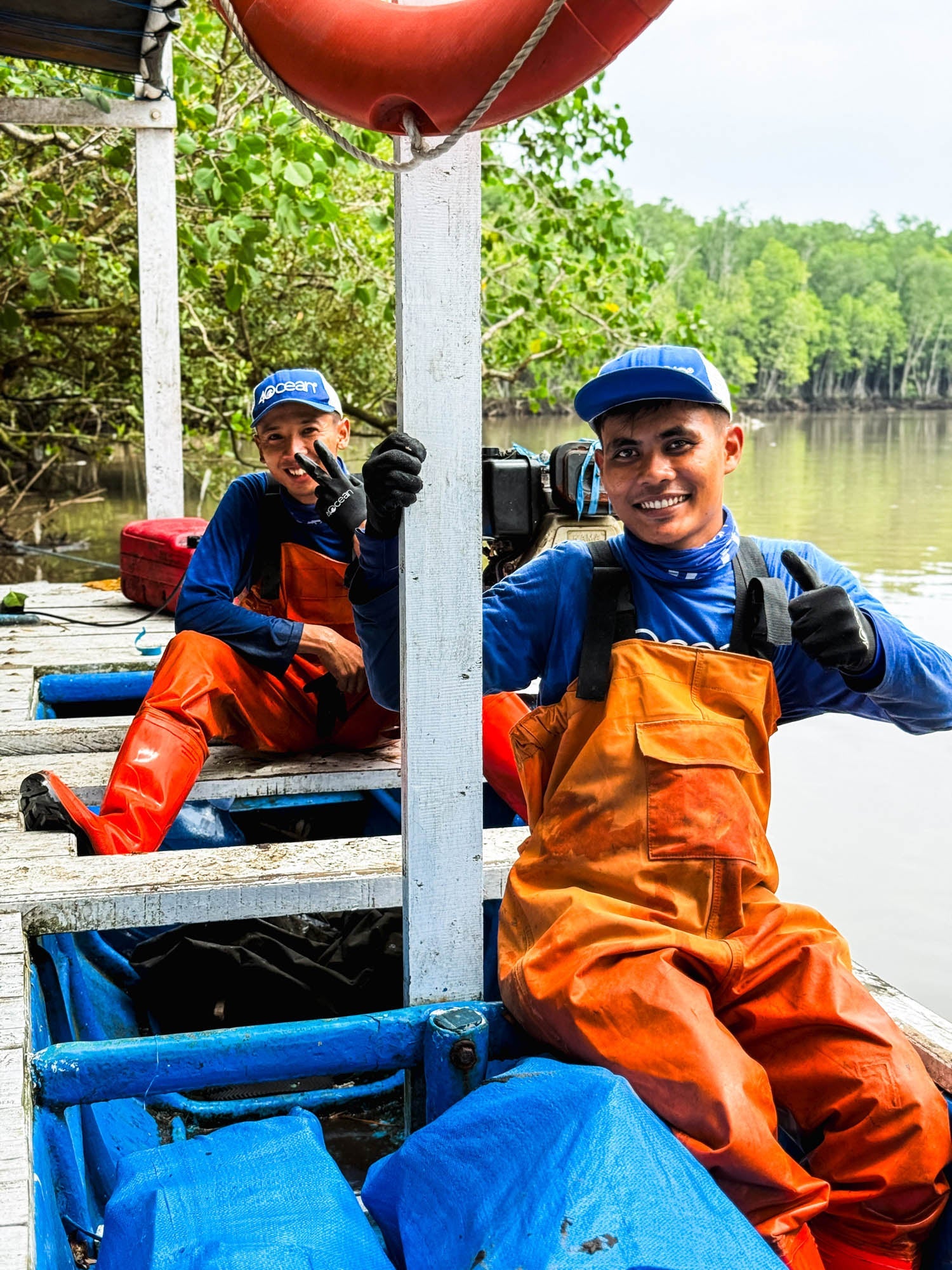
The call came in fast, and so did the team. Led by Captain Krisna, the crew prepared their gear and set out toward the affected area. The drive to the river took about 30 minutes, just enough time to assess the urgency of the situation and align on priorities. Once on site, a short but focused briefing mapped out the most critical zones where waste had accumulated.
The river was still unsettled. Strong currents pushed against bamboo clusters along the banks, where debris had gathered and compacted into dense pockets. Plastic bags, bottles, food containers, and mixed waste had woven themselves into the landscape, partially buried in sand or caught in vegetation.
Without hesitation, the team entered the water.


For hours, they worked through the current, pulling debris free piece by piece. It was slow, physical work. Some sacks filled quickly, while others took time as waste had to be carefully untangled from roots and branches. Still, the rhythm held. One sack, then another, then another.


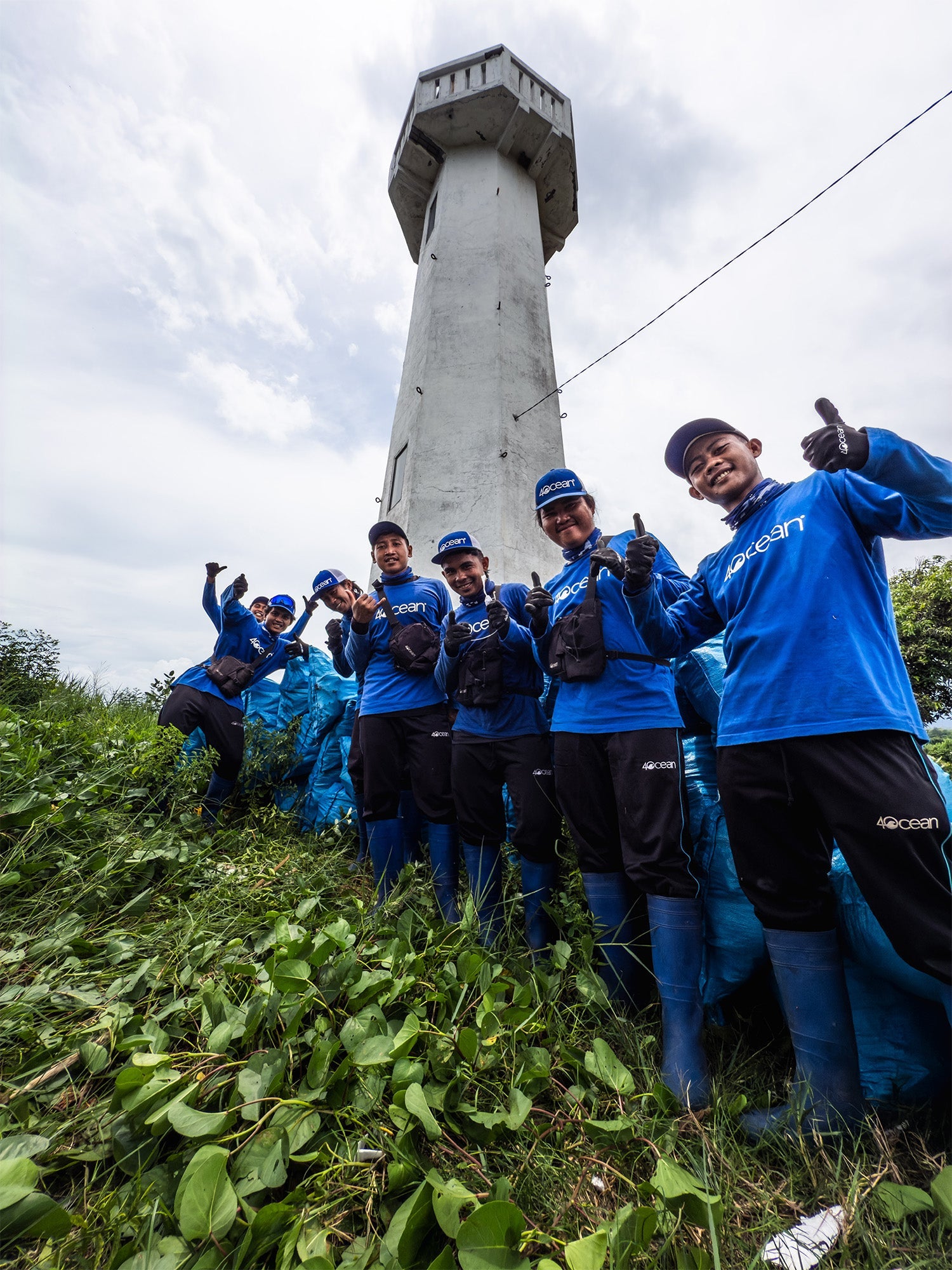
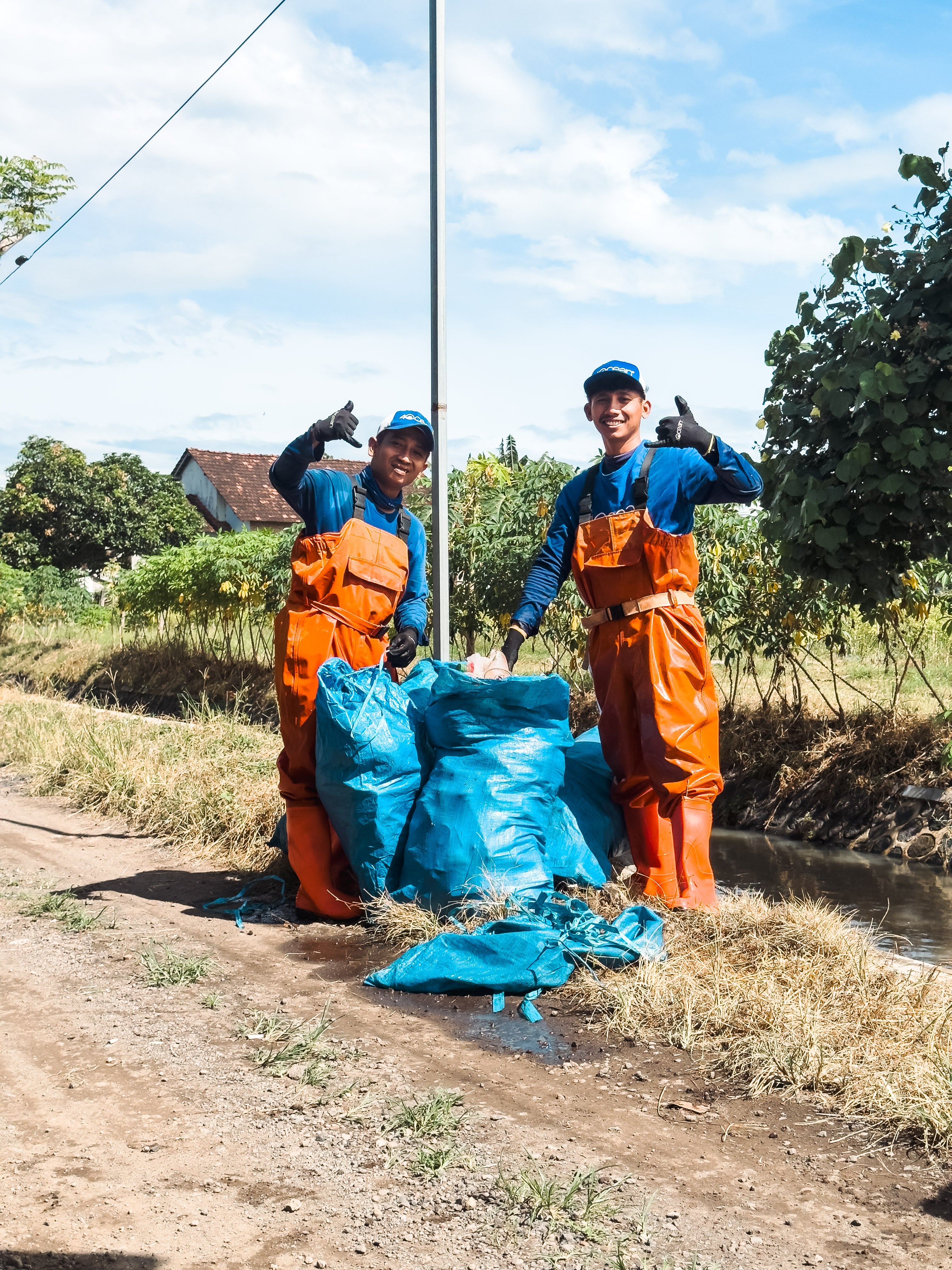
By the end of the operation, dozens of sacks lined the riverbank.
Each one was weighed and recorded, a necessary step not just for tracking impact but for understanding how waste moves through these systems after flooding events. In total, the team removed 1,539.5 pounds of debris from the Setail River, including plastic waste, mixed waste, and non-plastic materials such as cloth, cans, and diapers.
But the weight tells only part of the story.
“We hope the community becomes more educated through our daily cleanup actions and becomes wiser in managing waste, especially plastic waste,” shared Dandi Riski Asnanda. “We want to see rivers and other waterways remain clean, even when the river overflows.”
The challenges were constant throughout the day. The current remained strong, forcing the team to stay alert with every movement. The riverbanks were steep and slippery, making the transport of heavy sacks even more demanding. Every step required coordination, balance, and trust in one another.
Still, the work continued.
Because floods may be natural, but what they leave behind is not.
This cleanup stands as a reminder that rivers are not dumping grounds. Waste discarded upstream does not disappear. It returns, often with greater consequences, carried back by rising water into communities and ecosystems that depend on clean, flowing rivers.
Through continued action and partnerships like the one with Sony, the 4ocean Java team remains committed to protecting waterways at every stage, from immediate response to long-term impact.