5 MIN READ
03-30-2026
Restoring Trianggulasi Beach Supported by Oingo
Dika, 4ocean Jembrana Content Correspondent
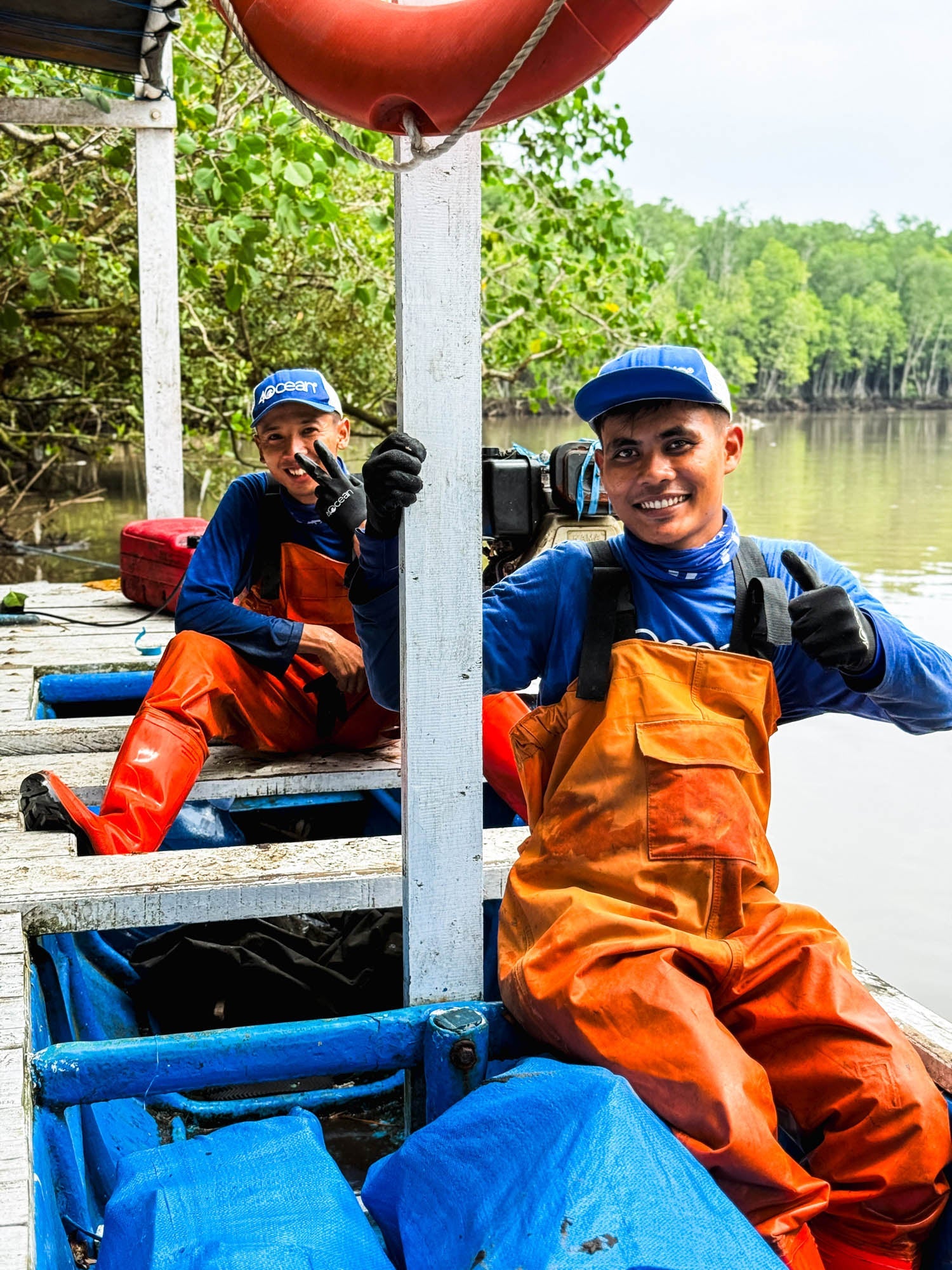
Under the heat of the morning sun, the 4ocean Java River Team set out toward one of the most remote stretches of coastline in Alas Purwo. This cleanup, supported by Oingo, was a response to a growing reality. Even places far from dense human activity are no longer untouched. Plastic waste finds its way in.
Trianggulasi Beach is known for its wide white sands and sweeping ocean views. At a distance, it still looks pristine. But as the team approached the shoreline, the contrast became clear. Debris was scattered across the beach, caught between driftwood, tangled in bamboo, and spread across the sand in fragments both large and small.


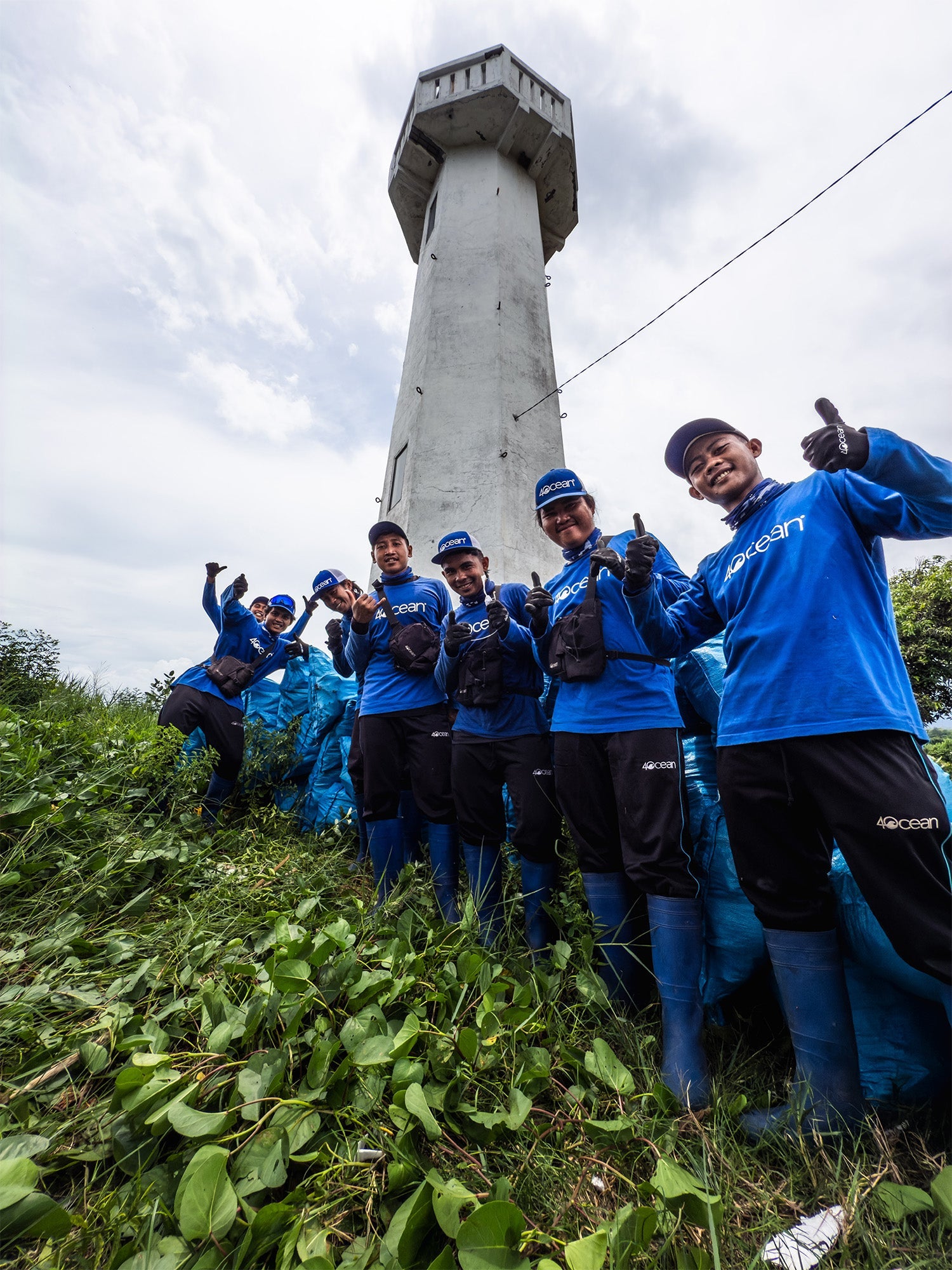
Captain Prayoga Setiawan led the team as they moved quickly into position. Sacks in hand, the crew began combing the shoreline, working methodically under the sun. Each step forward revealed more waste. Plastic bottles, worn footwear, styrofoam, and broken fragments of everyday items that had traveled far to end up here.
The work was slow in some areas. Trash wedged between heavy logs and bamboo required careful removal. Nothing could be rushed. Each piece had to be pulled free, one at a time, without leaving anything behind.
As the hours passed, the visible impact began to take shape. Areas once covered in debris slowly opened up, revealing the natural beauty beneath. The shoreline began to breathe again.


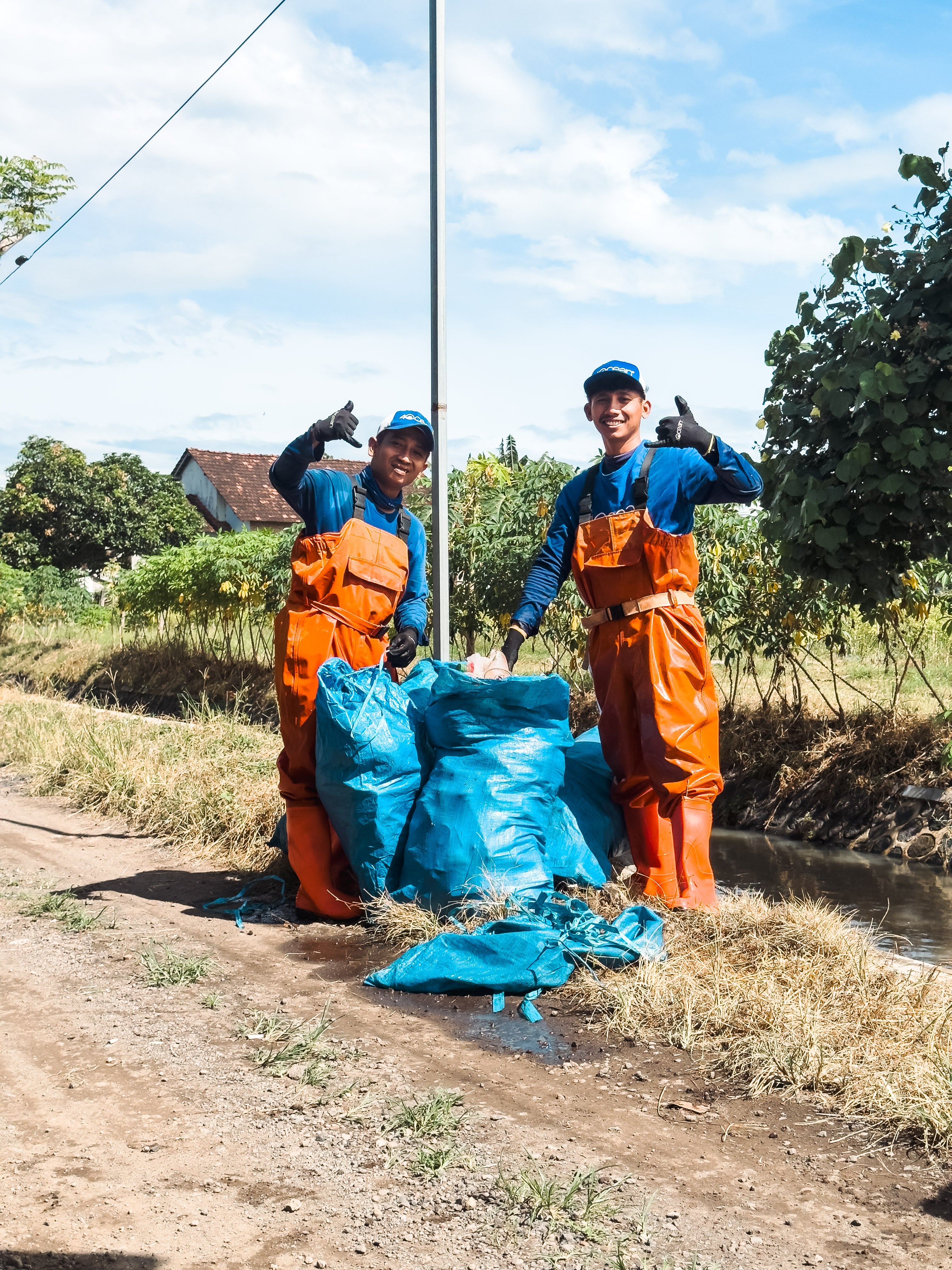
By the end of the cleanup, the team had collected 1,111 pounds of waste, filling 58 sacks. The debris was gathered and prepared for transport, with each sack representing both removal and data. The weighing process remains critical in understanding how marine debris continues to reach even the most protected coastlines.
For the crew, the experience carried weight beyond the numbers. “Standing on Trianggulasi Beach made me realize one thing,” said Dwi Agus Saputra. “Ocean currents never choose what kind of waste they carry. Even in a remote place like this, plastic from the city still finds its way here. We have to start managing our waste more responsibly.”
This reality continues to define the work. Marine debris does not recognize boundaries. What is discarded inland moves through rivers, drains, and waterways before reaching the ocean. From there, currents carry it across distances until it returns to shorelines like Trianggulasi.
The challenge at this location was not just the volume, but the way the waste had settled into the environment. Driftwood and bamboo created natural traps, making cleanup more time-consuming and physically demanding. Still, the team remained focused, understanding that thorough work matters more than speed.
Trianggulasi Beach is part of a protected national park, a place meant to preserve ecosystems and natural balance. Yet even here, the presence of plastic tells a larger story. Conservation cannot exist in isolation. It depends on collective responsibility far beyond the boundaries of any one location.
Through continued cleanup efforts and partnerships like Oingo, 4ocean Java remains committed to addressing this issue at its source and along its journey. Because protecting remote coastlines begins long before the waste ever reaches them.