5 MIN READ
04-27-2026
The Ocean’s Largest Plastic Trap: How Your Trash Travels Across the Pacific
Cathleen P. Montano
Great Pacific Garbage Patch" has captured public imagination, often bringing to mind a distant, isolated problem. Something far out at sea. Something disconnected from everyday life. For years, the phrase "Great Pacific Garbage Patch" has captured the public imagination, often bringing to mind a distant, isolated problem, something far out at sea and disconnected from everyday life.
The reality is more direct than most people realize.
The Great Pacific Garbage Patch, or GPGP, is not just a remote accumulation of debris. It is a destination. And a significant portion of what ends up there begins its journey much closer to home.
Stretching from the west coast of North America to Japan, the GPGP exists within the North Pacific Subtropical Gyre, a vast system of rotating ocean currents. These currents act like a slow-moving conveyor, pulling debris inward and holding it within a relatively calm, high-pressure zone. Once plastic enters this system, it can circulate for years, breaking apart but never truly disappearing.
What makes this system so striking is not only its scale, but also its reach. Objects discarded along coastlines in California, washed into rivers in urban centers, or carried through drainage systems during storms can all become part of this transoceanic movement. The same currents that shape global climate patterns also transport waste across thousands of miles, linking everyday human behavior directly to one of the most concentrated zones of marine plastic on Earth.
In this sense, the GPGP is not simply a patch. It is a reflection of a pathway.
An estimated 80 percent of marine plastic pollution originates on land. A bottle left on a sidewalk, a wrapper caught in a storm drain, or packaging that slips out of an overfilled bin does not remain where it was discarded. Rainfall and runoff carry it into waterways. Rivers act as channels, moving debris from inland areas toward the coast. From there, ocean currents take over, distributing plastic across entire ocean basins.
For communities along the Pacific, particularly in North America and parts of Asia, this connection is immediate. Waste generated on land does not stay local; it moves and travels across vast distances. And in many cases, it converges in places like the GPGP.
Yet what arrives there is not always recognizable. While some larger debris remains intact, much of it undergoes a process of fragmentation. Sunlight, saltwater, and mechanical forces break plastic down into smaller and smaller pieces. Over time, these fragments become microplastics, suspended throughout the water rather than floating visibly on the surface.
This is why the Great Pacific Garbage Patch is often misunderstood. It is not a floating island that can be easily removed. It is a dispersed field of plastic spread across a vast area and mixed into the ocean's upper layers. Cleanup at this stage becomes significantly more complex, both technically and logistically.
The environmental consequences extend far beyond visibility. Marine animals ingest plastic, mistaking it for food. Larger debris entangles wildlife, limiting movement and often leading to fatal outcomes. Microplastics absorb and transport toxic substances, introducing them into marine food webs. Over time, these particles make their way into seafood, salt, and other products consumed by humans.
Despite its scale, the GPGP highlights a critical point about plastic pollution. By the time waste reaches this stage, options become limited. The ocean is vast. The debris is fragmented. Recovery becomes difficult.
This is why many efforts are shifting focus toward interception. Instead of relying solely on open ocean cleanup, organizations like 4ocean are working closer to the source, targeting areas where plastic is still concentrated and recoverable.
These include rivers, coastlines, and mangrove forests, where natural conditions cause debris to accumulate before it disperses into the open ocean. By removing waste at these points, it is possible to prevent it from entering large-scale current systems like the North Pacific Gyre.
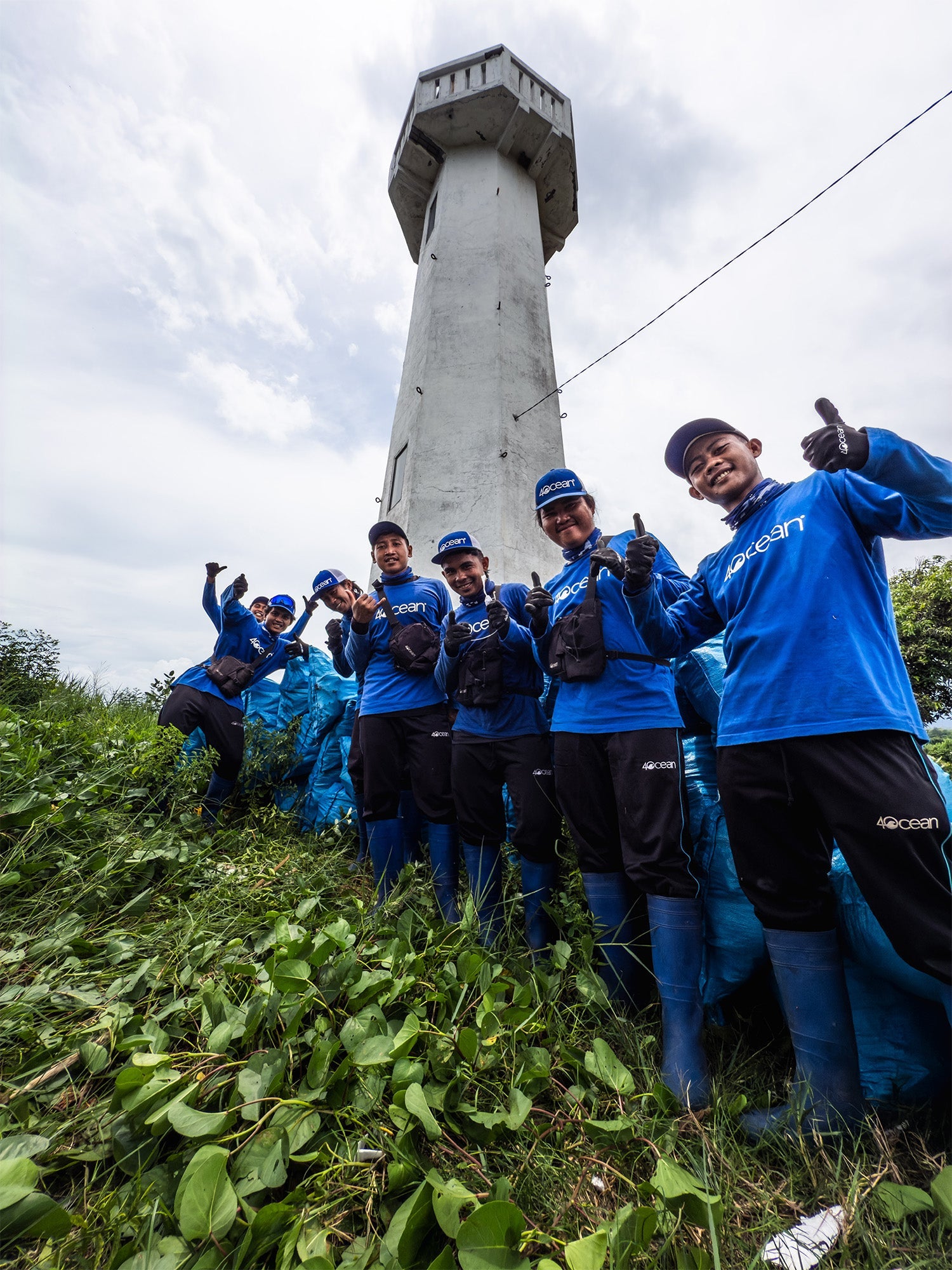
4ocean’s approach is built around consistency and measurability. Full time crews operate daily, collecting plastic and marine debris, which is then sorted, weighed, and recorded. This creates a system of verified impact, where each pound removed represents material that will not continue its journey across the ocean.
This model is further supported through partnerships with global brands such as HP Inc., Chomps, and GoodPop. These collaborations connect everyday products and business operations to ocean cleanup, helping fund large-scale recovery efforts while embedding environmental responsibility into supply chains.
Together with innovations in waste management and material design, these efforts represent a broader shift toward addressing plastic pollution at multiple points along its path not only where it ends up, but also where it begins.
The implications are especially relevant on Earth Day. The Great Pacific Garbage Patch is often framed as a distant environmental issue, but it is more accurately understood as a global system with local origins. It reflects how waste moves, how systems connect, and how individual actions can scale into planetary consequences.
The idea that “your trash” can travel across the Pacific may seem abstract, but it is grounded in physical processes that operate every day. Currents do not recognize borders. Waterways do not isolate impact. What enters the system in one place can reappear thousands of miles away.
Addressing this reality requires a shift in perspective. Not just seeing plastic as waste, but understanding its trajectory. Recognizing that prevention and early intervention are often more effective than downstream solutions.
Because the story of the Great Pacific Garbage Patch is not only about accumulation. It is about movement.
And if that movement can be interrupted, even in small ways, the outcome can begin to change.
If you want to collaborate on plastic neutrality, visit 4ocean Partnerships to learn how your brand can join the authentic sustainability movement and help remove even more plastic from the ocean.
On Earth Day, the focus is not only on what is already in the ocean, but on what is still in our control. Every piece of plastic that is properly managed, every pound removed before it reaches open water, represents a break in the chain.
This represents a disruption in the current.
And a step toward ensuring that what leaves our hands does not end up circling the Pacific for decades to come.


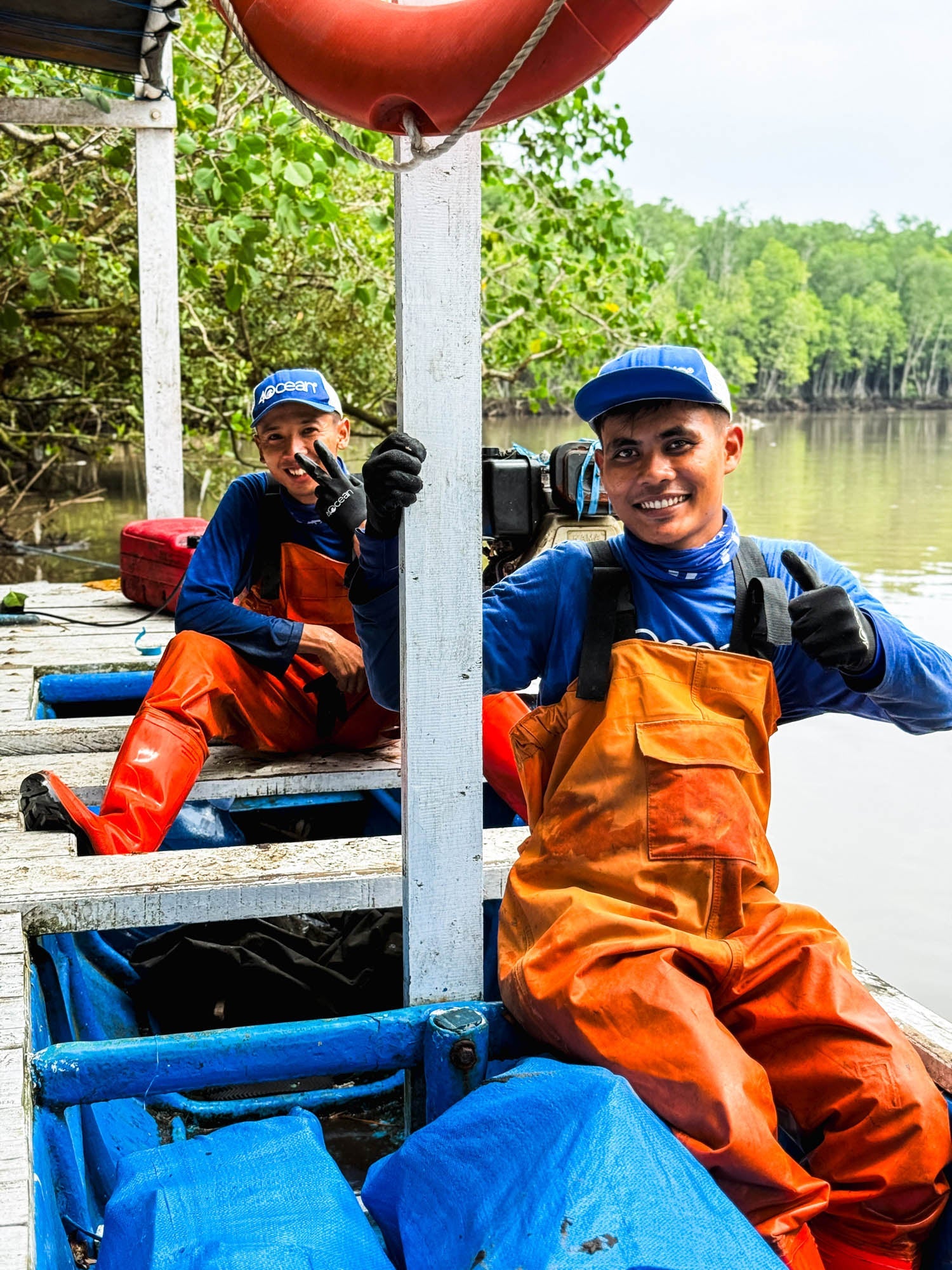
Because sections of the river were shallow, the crew could wade directly into the water to reach debris trapped in the flow. They moved slowly and methodically, collecting tiny fragments alongside larger items such as sandals, plastic cups, Styrofoam, and other waste.
Each handful of microplastics required patience. Each sack filled represented painstaking work.


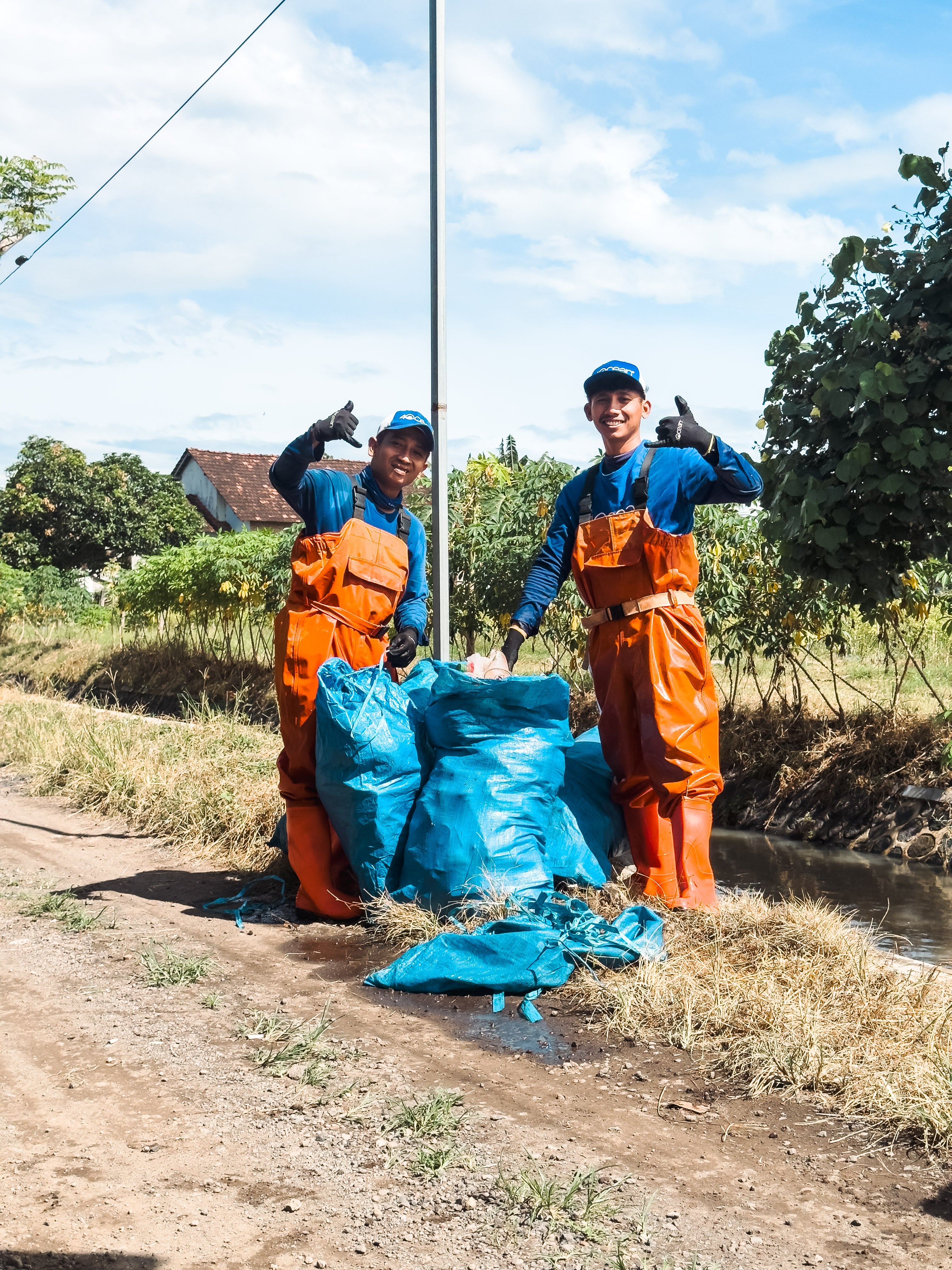
After hours in the river, the team gathered the collected waste for weighing. By the end of the day, they had removed 47 sacks totaling 1,060.1 pounds of plastic waste, much of it made up of microplastics.
Yet this mission came with a difficult realization. The scale and distribution of the pollution meant the cleanup could not be completed in one day.
“Seeing the condition of the Trianggulasi River today is a stark warning for all of us,” said crew member Hendrik Prastyo. “Our mission is far from over. We will return. We will not stop until this river can breathe again.”
That unfinished nature gives this story its weight.
This was not a cleanup that ended with full resolution. It ended with commitment.
Microplastics demand extraordinary precision and time to remove. Unlike larger debris that can be lifted in moments, these particles hide in sediment, drift with the current, and spread through habitats almost invisibly. The team knew progress would require repeated return missions.
And still, every pound collected mattered.


The Trianggulasi River is more than a waterway. It is an artery connecting land, ocean, and wildlife. What happens here does not stay here. Pollution in the river becomes pollution at the coast. What enters upstream eventually reaches the sea.
This cleanup also points to a larger truth. Microplastic pollution is not created in isolation. It reflects broader challenges in waste management, the prevalence of single use plastic, and the consequences of habits far beyond this river.
But the team’s work offers another truth as well.
Change can begin with consistency.
With every return to this river, every sack filled, and every fragment removed, restoration becomes possible.
Because sometimes protecting an ecosystem is not about finishing the mission in a day. It is about refusing to abandon it.