


7 min read
Why 4ocean Uses 1% for the Planet as Verification, Not Branding
CATHLEEN P. MONTANO
In today’s sustainability landscape, skepticism is healthy.
Consumers have seen too many environmental logos used as decoration rather than proof. Certifications that were once trust signals are now questioned: Is this real impact, or just branding?
That question matters, especially in ocean conservation, where plastic pollution continues to rise and solutions must be more than symbolic.
This is where 1% for the Planet plays a very specific role for 4ocean, not as a marketing badge, but as an external accountability layer on top of already-verified cleanup operations.
What 1% for the Planet Is (and Isn’t)
At its core, 1% for the Planet is a financial accountability framework.
Member companies commit to donating at least 1% of gross annual revenue (not profit) to vetted environmental partners. The requirement is strict by design:
- Contributions are mandatory
- Revenue-based, not discretionary
- Independently verified
- Directed only to approved environmental organizations
What the certification does not do is measure impact itself. It does not claim to clean oceans, remove plastic, or restore ecosystems. Instead, it ensures that money is consistently flowing into organizations that do.
That distinction is important because for 4ocean, cleanup does not start with the pledge.
4ocean’s Cleanup Happens Before the Certification
4ocean is fundamentally an operational cleanup company.
Long before joining 1% for the Planet, 4ocean had already built:
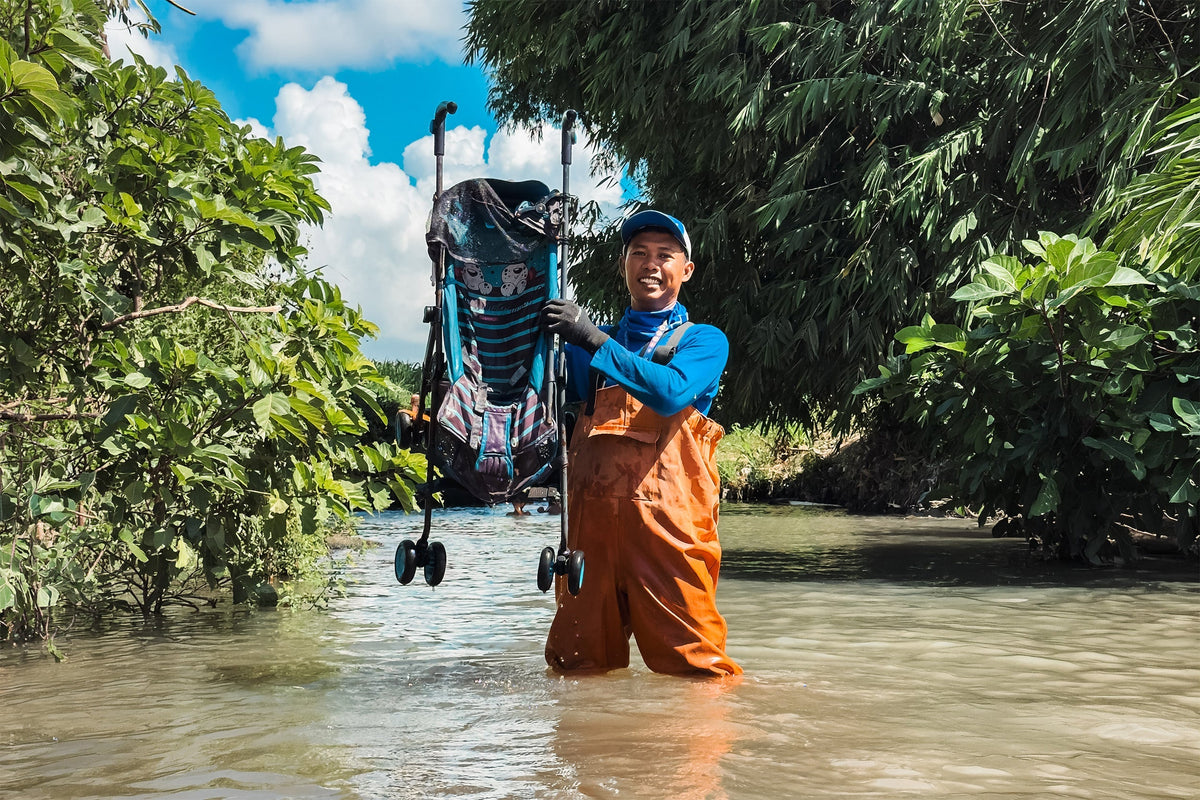
- Full-time cleanup crews across multiple countries
- Boats, equipment, and safety systems
- Waste sorting and processing infrastructure
- Location-based tracking of recovered material
Today, those operations have removed more than 45 million pounds of plastic and trash from oceans, rivers, and coastlines worldwide.
That impact is verified through internal systems, partner audits, and transparent reporting. It is not dependent on a certification to exist.
So why participate in 1% for the Planet at all?
Because verification matters, especially when scrutiny increases.
Adding a Second Layer of Accountability
Critics often assume certifications are used to create credibility. In 4ocean’s case, the opposite is true.
The company already funds and operates cleanup at scale. The 1% for the Planet commitment adds a second, external check, one that operates outside of 4ocean’s own reporting systems.
Here’s what that means in practice:
- 4ocean continues to reinvest a significant portion of revenue into daily cleanup operations
- On top of that, 1% of gross revenue is donated to vetted environmental nonprofits
- Those contributions are independently tracked and audited
In other words, the certification doesn’t replace operational transparency, it reinforces it.
This dual structure ensures that 4ocean is accountable not only for what it removes, but also for how its revenue supports the broader environmental ecosystem.
Why This Matters for Brands and Partners
For brand partners, sustainability claims carry risk.
Working with a cleanup organization that only reports internally can leave room for doubt. Working with one that also submits to external financial verification reduces that risk significantly.
That’s why companies across food & beverage, consumer goods, apparel, and technology align with 4ocean, including:
- Corona
- HP Inc.
- GoodPop
- SC Johnson
- U.S. Polo Assn.
- Garden of Life
- Kitsch
These brands operate in sectors where plastic use is unavoidable. Their sustainability strategies require partners whose impact can stand up to audits, ESG disclosures, and public scrutiny.
4ocean’s participation in 1% for the Planet helps make those partnerships defensible, not louder.
Transparency Over Optics
If 1% for the Planet were simply a branding exercise, it would show up front and center in marketing campaigns.
Instead, for 4ocean, it functions quietly, embedded in financial systems, compliance checks, and long-term accountability.
The company’s primary proof points remain unchanged:
- Pounds of plastic removed
- Locations cleaned
- Crews employed
- Waste responsibly processed
The certification doesn’t inflate those numbers. It doesn’t replace them. It simply adds assurance that the business itself is structured to give back beyond its core operations.
That’s an important distinction in a space where overstatement has eroded trust.
Why Verification Is the Future of Sustainability
The sustainability conversation is moving past slogans.
Consumers, regulators, and investors are no longer asking whether companies support environmental causes. They’re asking whether companies can prove outcomes, and whether those outcomes are backed by systems that prevent shortcuts.
For 4ocean, 1% for the Planet is part of that system.
Not because the company needs credibility, but because credibility must be maintained as impact scales.
The Bottom Line
4ocean doesn’t use 1% for the Planet to claim impact.
It uses it to validate responsibility.
Cleanup operations remove plastic from the environment every day.
The certification ensures the business itself remains accountable, financially and structurally, to the planet it serves.
That’s not branding.
That’s governance.
And in a world demanding proof, governance is what separates sustainable action from sustainable storytelling.
Because saving the ocean isn’t charity, it’s a commitment to a cleaner future, one pound at a time.