5 MIN READ
07-10-2025
Restoring the Flow: A Cleanup Rooted in Culture
Ahmad Fasta, 4ocean Indonesia Content Correspondent
The rain hadn’t stopped for 24 hours.
What should’ve been a quiet season was interrupted by a surge of heavy rainfall, triggering sudden floods that submerged homes and overflowed the canals. These weren’t just ditches—they’re part of a centuries-old irrigation network that nourishes rice fields and preserves a cultural legacy.
Now, they were choking on trash.


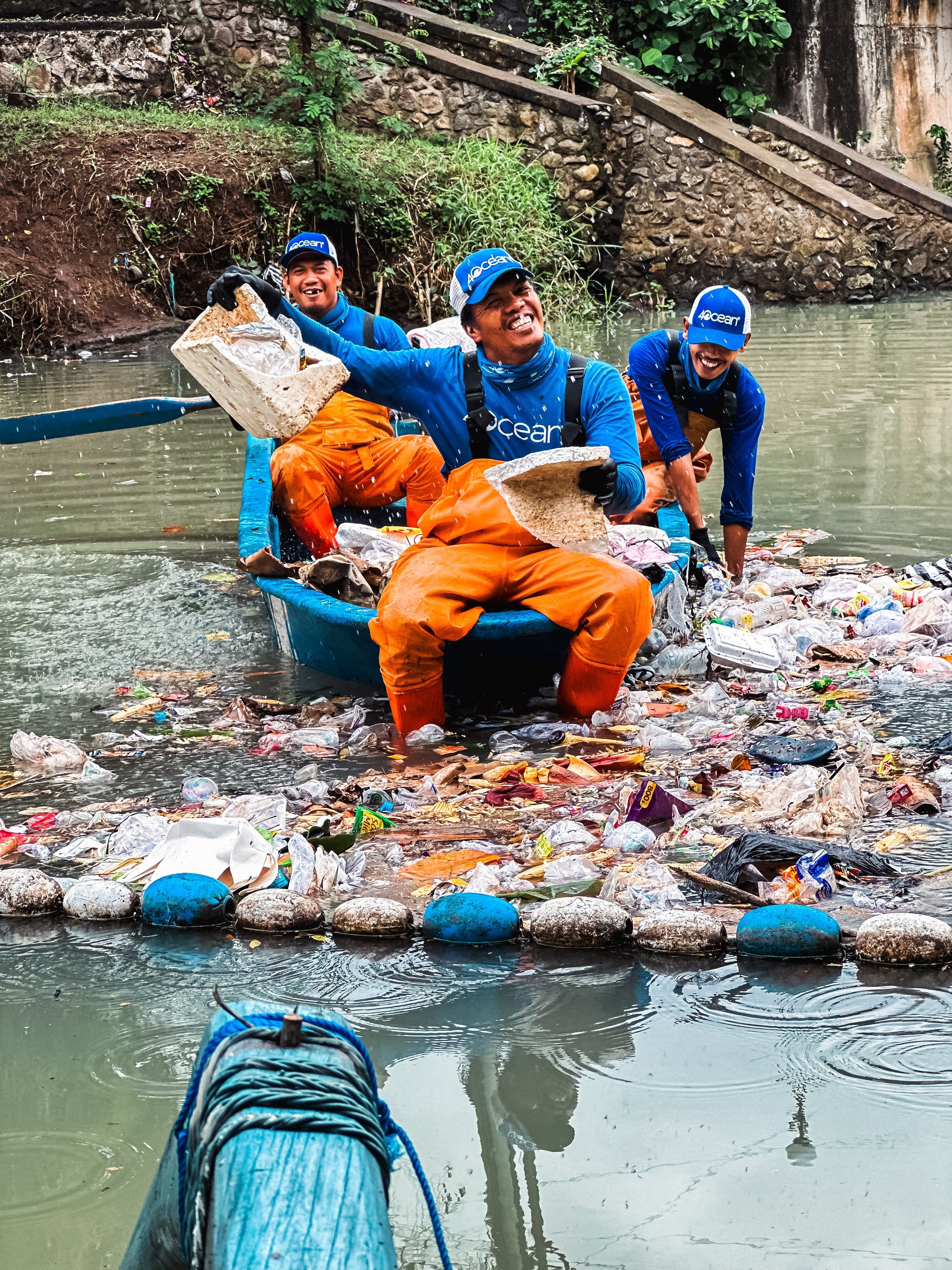
When the 4ocean River Team arrived the next morning, they found heaps of bamboo, tree roots, plastic wrappers, sacks, diapers, and fabric scraps jammed in the water. The current was too strong to enter. The team, spread thin across other flood-hit areas, had to hold off.
That night, another wave swept the debris downstream.
The next day, attention turned to a single Riverboom net—so packed with waste it threatened to block water flow entirely.


With the current still high, the crew adapted. One member paddled solo in a narrow canoe while two others guided from the banks. Sack by sack, they removed the debris—sachets, fabric, soaked plastic, tangled messes—without damaging the net. The process was slow, careful, and exhausting.
In total, they removed 1,003.05 pounds of waste from the canal—much of it soaked and tangled, including plastic sachets, fabric scraps, and household waste. It may not have been the biggest haul of the month, but it was one of the most urgent.
“Even with a small team and high water, we couldn’t let that trash sit,” one crew member said. “If the subak is blocked, the fields dry up. It’s that simple.”
This cleanup wasn’t just about plastic. It was about food security, community resilience, and maintaining the sacred balance between water, land, and people.
And so, in the thick mud and under gray skies, the crew kept going.
Because the water must flow.