10 MIN READ
01-12-2026
The Enemy We’re Fighting: The Plastic Pollution Crisis
Dika, 4ocean Jembrana Content Correspondent
Three Frontlines We’re Focusing On in 2026
Plastic pollution isn’t a headline. It’s a daily reality in the places that should be most alive: coastlines, riverbanks, mangroves, and open water.
It shows up in the quiet moments first:
Plastic pollution isn’t a headline. It’s a daily reality in the places that should be most alive: coastlines, riverbanks, mangroves, and open water.
It shows up in the quiet moments first:
- a sea turtle hatchling weaving around bottle caps and torn film
- an egret with fishing line wrapped tight around its wing
- a dolphin surfacing through a field of drifting debris
- a river that carries yesterday’s convenience downstream, right into tomorrow’s ocean
- a sea turtle hatchling weaving around bottle caps and torn film
- an egret with fishing line wrapped tight around its wing
- a dolphin surfacing through a field of drifting debris
- a river that carries yesterday’s convenience downstream, right into tomorrow’s ocean


This is the enemy we’re fighting, not just “plastic” in the abstract, but the system that produces waste faster than nature can absorb it, and the reality that it ends up where it doesn’t belong.
In 2026, our cleanup teams will be concentrating efforts across three critical environments that represent the real flow of pollution:
This is the enemy we’re fighting, not just “plastic” in the abstract, but the system that produces waste faster than nature can absorb it, and the reality that it ends up where it doesn’t belong.
In 2026, our cleanup teams will be concentrating efforts across three critical environments that represent the real flow of pollution:
- Rivers (where plastic begins its journey)
- Beaches (where it accumulates and impacts wildlife immediately)
- Ocean environments (where it disperses, persists, and becomes hardest to remove)
- Rivers (where plastic begins its journey)
- Beaches (where it accumulates and impacts wildlife immediately)
- Ocean environments (where it disperses, persists, and becomes hardest to remove)


This is your field guide to what cleanup actually looks like: the people, the process, the why, and the living ecosystems your support helps protect.
And if you’re wondering how a monthly subscription can meaningfully help, the answer is simple:
Because cleanup isn’t a one-time effort. It’s a consistent fight.
This is your field guide to what cleanup actually looks like: the people, the process, the why, and the living ecosystems your support helps protect.
And if you’re wondering how a monthly subscription can meaningfully help, the answer is simple:
Because cleanup isn’t a one-time effort. It’s a consistent fight.
River Cleanups
Stopping Plastic Before It Reaches the Ocean

If you want to understand ocean plastic, start upstream.
A river can look calm on the surface, but it’s constantly moving. It collects what we drop, lose, and forget: wrappers, foam, bottles, bags, microplastics, and fragments. In heavy rain, it surges. In drought, it reveals decades of buildup in the mud.
Rivers are not just scenic waterways. They’re conveyor belts.
And when plastic enters a river, it rarely stays there.
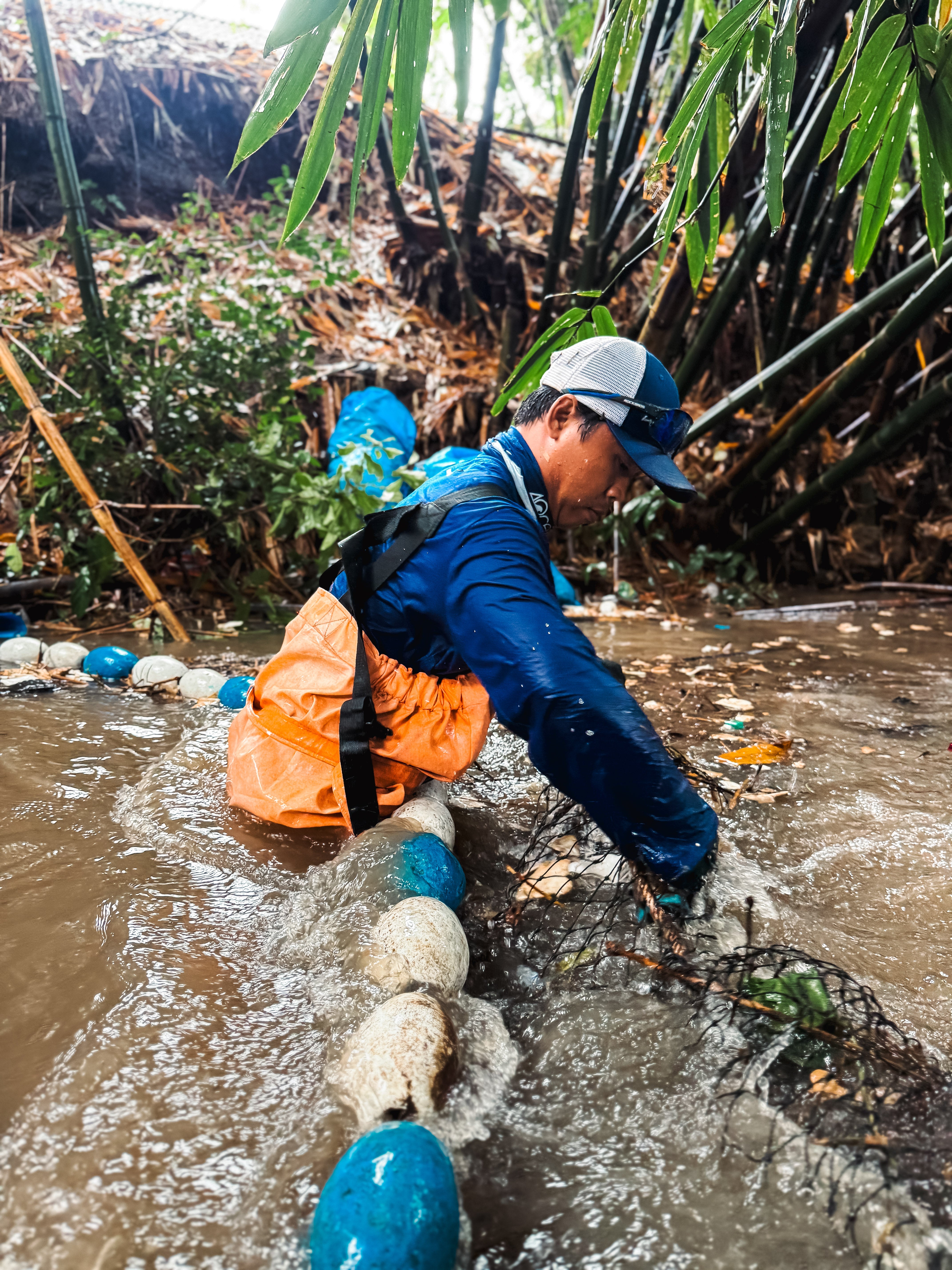
To stop pollution before it reaches the ocean, our teams focus on interception, not disruption. One of the most effective tools we use in river environments is a system of floating barricades, also known as booms.
These booms are designed to capture plastic without blocking the river itself.
If you want to understand ocean plastic, start upstream.
A river can look calm on the surface, but it’s constantly moving. It collects what we drop, lose, and forget: wrappers, foam, bottles, bags, microplastics, and fragments. In heavy rain, it surges. In drought, it reveals decades of buildup in the mud.
Rivers are not just scenic waterways. They’re conveyor belts.
And when plastic enters a river, it rarely stays there.
To stop pollution before it reaches the ocean, our teams focus on interception, not disruption. One of the most effective tools we use in river environments is a system of floating barricades, also known as booms.
These booms are designed to capture plastic without blocking the river itself.
Floating Booms: Working With the River, Not Against It

Floating booms are strategically placed across sections of a river where debris naturally travels and collects. They sit on the surface of the water, gently guiding plastic and trash toward a collection point while still allowing water, sediment, fish, and boats to pass freely.
This approach is critical. Rivers are living systems, and stopping their flow would cause more harm than good. Booms allow us to intercept pollution without altering the river’s natural movement.
They are especially effective at capturing:
Floating booms are strategically placed across sections of a river where debris naturally travels and collects. They sit on the surface of the water, gently guiding plastic and trash toward a collection point while still allowing water, sediment, fish, and boats to pass freely.
This approach is critical. Rivers are living systems, and stopping their flow would cause more harm than good. Booms allow us to intercept pollution without altering the river’s natural movement.
They are especially effective at capturing:

- Plastic bottles and containers
- Food packaging and wrappers
- Foam and lightweight debris
- Bags, film, and floating fragments
- Plastic bottles and containers
- Food packaging and wrappers
- Foam and lightweight debris
- Bags, film, and floating fragments
A Controlled, Systematic Cleanup Process

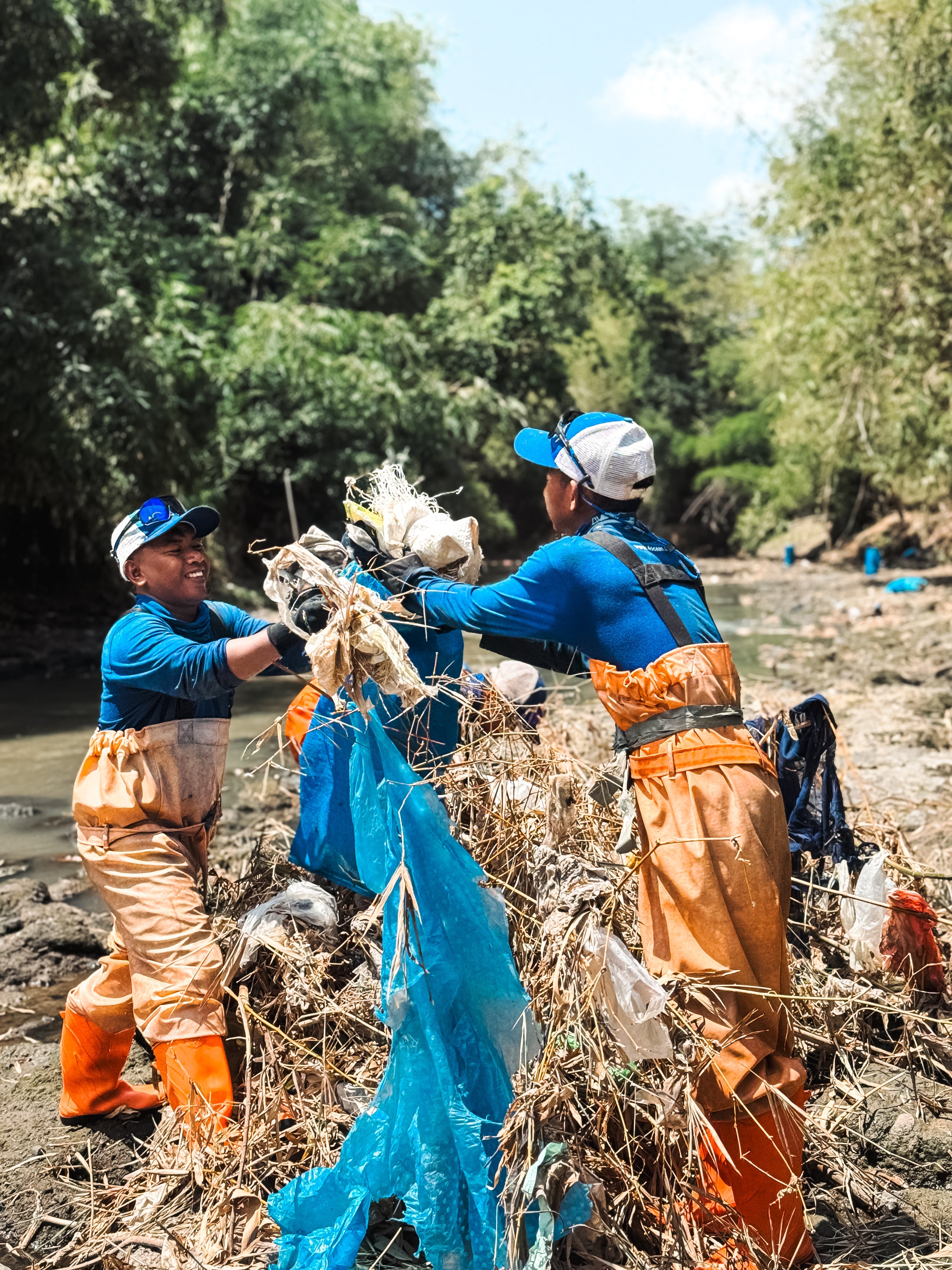
Once debris is guided into a collection zone, crews begin removal in a deliberate, section-by-section process.
Teams focus on:
Once debris is guided into a collection zone, crews begin removal in a deliberate, section-by-section process.
Teams focus on:
- Accumulation points where plastic concentrates against the boom
- Riverbanks and root systems, where debris becomes tangled and trapped
- Shallow edges, where waste settles and embeds into mud and vegetation
- Mixed organic clusters, where plastic hides among leaves and natural material
- Accumulation points where plastic concentrates against the boom
- Riverbanks and root systems, where debris becomes tangled and trapped
- Shallow edges, where waste settles and embeds into mud and vegetation
- Mixed organic clusters, where plastic hides among leaves and natural material

River trash is often waterlogged, tangled, and heavy. Removing it early is essential. During storms or floods, this debris can be lifted and redistributed across miles of waterways or pushed directly into coastal ecosystems.
River trash is often waterlogged, tangled, and heavy. Removing it early is essential. During storms or floods, this debris can be lifted and redistributed across miles of waterways or pushed directly into coastal ecosystems.
By intercepting plastic before those high-flow events, river booms help prevent pollution from spreading further and breaking down into smaller, harder-to-recover pieces.
By intercepting plastic before those high-flow events, river booms help prevent pollution from spreading further and breaking down into smaller, harder-to-recover pieces.
Why This Approach Matters
Floating booms allow us to:
Floating booms allow us to:
- Stop plastic upstream, before it reaches the ocean
- Reduce the formation of microplastics by removing debris earlier
- Protect sensitive riverbanks and habitats from repeated contamination
- Conduct cleanup in a way that respects the river’s natural behavior
- Stop plastic upstream, before it reaches the ocean
- Reduce the formation of microplastics by removing debris earlier
- Protect sensitive riverbanks and habitats from repeated contamination
- Conduct cleanup in a way that respects the river’s natural behavior


This is what prevention looks like in practice: quiet, consistent, and incredibly effective.
This is what prevention looks like in practice: quiet, consistent, and incredibly effective.
The Life That Depends on Clean Rivers


- Rivers may look like simple waterways, but they are living corridors that feed, shelter, and connect entire ecosystems.
- Along their banks and shallows, birds depend on clean water to feed and nest. When plastic collects in these areas, it doesn’t just clutter the landscape; it replaces food with debris, tangles nesting material, and contaminates the places young birds learn to survive.
- Fish and amphibians live at the base of this system. As plastic breaks down in rivers, it becomes easier to ingest and harder to remove, moving quietly through the food chain. What starts as a bottle or wrapper can quickly become fragments that affect everything from small fish to the predators that rely on them.
- Rivers don’t have the ability to reject what we put into them. Cleanup helps restore balance by removing the materials that don’t belong, protecting the wildlife that depends on flowing, living water.
- Rivers may look like simple waterways, but they are living corridors that feed, shelter, and connect entire ecosystems.
- Along their banks and shallows, birds depend on clean water to feed and nest. When plastic collects in these areas, it doesn’t just clutter the landscape; it replaces food with debris, tangles nesting material, and contaminates the places young birds learn to survive.
- Fish and amphibians live at the base of this system. As plastic breaks down in rivers, it becomes easier to ingest and harder to remove, moving quietly through the food chain. What starts as a bottle or wrapper can quickly become fragments that affect everything from small fish to the predators that rely on them.
- Rivers don’t have the ability to reject what we put into them. Cleanup helps restore balance by removing the materials that don’t belong, protecting the wildlife that depends on flowing, living water.
In river environments, plastic doesn’t just harm animals directly. It changes the ecosystem beneath them, the water quality, the food sources, the nesting areas. Cleanup helps restore that foundation.
In river environments, plastic doesn’t just harm animals directly. It changes the ecosystem beneath them, the water quality, the food sources, the nesting areas. Cleanup helps restore that foundation.
The broader environmental impacts of river cleanups
- Reduced downstream pollution into coastal habitats
- Healthier fish populations by improving habitat quality
- Improved water flow by removing debris blockages
- Reduced breakdown into microplastics by removing items earlier
- Cleaner community waterways, encouraging stewardship and long-term protection
- Reduced downstream pollution into coastal habitats
- Healthier fish populations by improving habitat quality
- Improved water flow by removing debris blockages
- Reduced breakdown into microplastics by removing items earlier
- Cleaner community waterways, encouraging stewardship and long-term protection

Beach Cleanups
Protecting Sea Turtles and Coastal Life Where It’s Most Vulnerable

Beaches are where plastic becomes personal.
It’s where families walk. It’s where hatchlings crawl. It’s where the ocean returns what we’ve thrown away.
And because beaches are where land meets sea, they are one of the most sensitive ecosystems on Earth; constantly reshaped by tides, storms, and human use.
Beaches are where plastic becomes personal.
It’s where families walk. It’s where hatchlings crawl. It’s where the ocean returns what we’ve thrown away.
And because beaches are where land meets sea, they are one of the most sensitive ecosystems on Earth; constantly reshaped by tides, storms, and human use.
What we do in beach cleanups (the real process)
1) We target high-impact zones first.
Beach debris accumulates in specific areas:
- the wrack line (where the tide leaves seaweed and trash)
- dune edges (where wind pushes lightweight plastics)
- access points and parking areas
- rocky pockets and jetty edges
- nesting zones (seasonally)
- the wrack line (where the tide leaves seaweed and trash)
- dune edges (where wind pushes lightweight plastics)
- access points and parking areas
- rocky pockets and jetty edges
- nesting zones (seasonally)
If we know where plastic “settles,” we can remove more of it, faster, before it grinds into fragments or gets pulled back into the water.


2) We remove the big stuff, then we go after the hidden stuff.


Beach cleanup isn’t just picking up bottles.
It's also:
- food wrappers torn into pieces
- foam broken into hundreds of pellets
- cigarette butts embedded in sand
- micro-fragments you only see when you slow down
- fishing line tangled in seaweed
- food wrappers torn into pieces
- foam broken into hundreds of pellets
- cigarette butts embedded in sand
- micro-fragments you only see when you slow down
- fishing line tangled in seaweed
This is where beach cleanup becomes real restoration work.
3) We treat sensitive habitats with care.
Dunes and coastal plants are more than scenery. They act as living barriers that absorb wave energy, stabilize sand, and protect shorelines from erosion during storms and rising tides. These areas are also critical nesting and shelter habitats for birds, turtles, and small coastal wildlife. During cleanups, crews move slowly and deliberately through these zones, taking care not to trample vegetation or disturb nests. The focus is on removing plastic and debris that choke root systems, alter sand movement, or trap animals, while leaving the natural defenses of the beach intact and thriving.


4) We sort and document.


Just like river cleanups, beach cleanups require careful sorting, safety checks, and thorough documentation. Beaches tend to collect a wide mix of debris, ranging from everyday consumer waste left behind by visitors to marine debris carried in by tides and currents. Crews must identify hazardous items, separate recyclables where possible, and record what they find to better understand pollution patterns. This process not only keeps volunteers safe during the cleanup, but also helps build accurate data that can inform future prevention efforts and targeted cleanup strategies.
Why beach cleanups matter

Beaches are a frontline for wildlife and a frontline for plastic returning to the ocean.
Every tide can re-circulate debris. Every storm can bury it. Every sunny weekend can add more.
Cleanup matters because it keeps plastic from becoming:
- microplastics in sand
- entanglement hazards for wildlife
- debris that re-enters the water and travels further
- microplastics in sand
- entanglement hazards for wildlife
- debris that re-enters the water and travels further
The Life That Depends on Clean Beaches
- Sea turtles often come to mind first, and for good reason. Beaches are where hatchlings take their first, most vulnerable steps toward the ocean. When those shorelines are littered with plastic, even a short journey can become dangerous.
- Along the tide line, shorebirds search for food in the sand. Plastic fragments and microplastics collect in the same places they feed, increasing the risk of ingestion and disrupting a delicate food web. Crabs move through debris-strewn shorelines as well, where plastic can trap them or replace natural shelter with something far more dangerous.
- Just offshore, seabirds skim the surface for food, often mistaking floating plastic for prey or becoming entangled in line and fragments that wash back into the water. And in nearshore environments, debris pulled out by the tide doesn’t disappear; it drifts into habitats that support dolphins, coral, and seagrass beds.
- What happens on the beach doesn’t stay on the beach. Cleanups here protect an entire coastal system from the sand beneath our feet to the life just beyond the waves.
- Sea turtles often come to mind first, and for good reason. Beaches are where hatchlings take their first, most vulnerable steps toward the ocean. When those shorelines are littered with plastic, even a short journey can become dangerous.
- Along the tide line, shorebirds search for food in the sand. Plastic fragments and microplastics collect in the same places they feed, increasing the risk of ingestion and disrupting a delicate food web. Crabs move through debris-strewn shorelines as well, where plastic can trap them or replace natural shelter with something far more dangerous.
- Just offshore, seabirds skim the surface for food, often mistaking floating plastic for prey or becoming entangled in line and fragments that wash back into the water. And in nearshore environments, debris pulled out by the tide doesn’t disappear; it drifts into habitats that support dolphins, coral, and seagrass beds.
- What happens on the beach doesn’t stay on the beach. Cleanups here protect an entire coastal system from the sand beneath our feet to the life just beyond the waves.


Plastic doesn’t just harm one animal. It interrupts the whole coastal chain.
The broader environmental impacts of beach cleanups

- Improved coastal habitat health (less entanglement, less ingestion risk)
- Reduced microplastics in sand over time by removing debris before breakdown
- Less plastic re-entering the water via tides and storms
- Healthier dunes and vegetation, supporting erosion control
- Cleaner coastlines that strengthen community engagement and stewardship
- Improved coastal habitat health (less entanglement, less ingestion risk)
- Reduced microplastics in sand over time by removing debris before breakdown
- Less plastic re-entering the water via tides and storms
- Healthier dunes and vegetation, supporting erosion control
- Cleaner coastlines that strengthen community engagement and stewardship
Ocean Cleanups
Protecting Dolphins, Whales, and the Life Beneath the Surface

The ocean is where plastic becomes hardest to see and hardest to remove.
Out in open water, debris spreads with currents. Some floats. Some sinks. Some become part of gyres, circulating for years. Some breaks into fragments that are nearly impossible to recover.
What we do in ocean cleanups (the real process)
1) We plan based on conditions, not convenience.


Ocean operations depend on:
- weather windows
- tide and current patterns
- safety considerations
- marine traffic and access
- target debris zones (where it accumulates)
- weather windows
- tide and current patterns
- safety considerations
- marine traffic and access
- target debris zones (where it accumulates)
This isn’t “go out and pick up trash.” It’s a planned, disciplined operation.
2) We run coordinated cleanup routes.
Crews move through high-probability zones where debris often collects:
- nearshore current lines
- areas down-current from populated coastlines
- convergence points where floating debris gathers
- nearshore current lines
- areas down-current from populated coastlines
- convergence points where floating debris gathers
The focus is on removing debris while it’s still recoverable before it fragments or becomes submerged.


3) We prioritize entanglement hazards.


Some of the most dangerous debris for marine mammals includes:
- fishing line
- rope
- netting
- straps and cords
- plastic film and bags
- fishing line
- rope
- netting
- straps and cords
- plastic film and bags
These materials don’t just pollute, they trap.
4) We recover, return, sort, and process.
Debris recovered at sea is brought back for:
- sorting by material type
- safe handling of sharp or hazardous items
- measurement and documentation
- responsible processing/disposal pathways
Ocean cleanup needs trust, because it’s hard for most people to visualize. Documentation is what turns “we cleaned” into “we proved it.”
- sorting by material type
- safe handling of sharp or hazardous items
- measurement and documentation
- responsible processing/disposal pathways


What we do in ocean cleanups (the real process)
Ocean plastic doesn’t stay in one place. It travels.
And as it travels, it becomes:
- more fragmented
- more likely to be ingested
- more likely to entangle wildlife
- more persistent in the ecosystem
- more fragmented
- more likely to be ingested
- more likely to entangle wildlife
- more persistent in the ecosystem
Ocean cleanup helps reduce immediate harm and long-term accumulation, especially when paired with upstream (river) and coastal (beach) work.
The Life That Depends on a Clean Ocean


- Out in the ocean, plastic pollution spreads quietly and relentlessly.
- Floating debris drifts through feeding grounds used by dolphins and whales, where plastic bags and fragments can be mistaken for prey or become deadly entanglements. These animals travel vast distances, and the pollution they encounter often comes from far beyond the horizon.
- Beneath the surface, the impact continues. Sea turtles navigate waters filled with floating plastic that resembles their natural food. Seabirds feed where debris accumulates, skimming the surface for fish while plastic moves through the same currents.
- Even though we don’t always see coral reefs, seagrass meadows, and nursery habitats are affected. Plastic can snag on reef structures, block sunlight, and degrade water quality, weakening the ecosystems that support thousands of species.
- What makes ocean plastic especially dangerous is its persistence. Once it’s there, it stays, breaking down into smaller pieces, circulating through currents, and moving through the marine food web.
- Cleanup in ocean environments helps reduce that load, protecting wildlife today and limiting the long-term damage plastic can cause tomorrow.
- Out in the ocean, plastic pollution spreads quietly and relentlessly.
- Floating debris drifts through feeding grounds used by dolphins and whales, where plastic bags and fragments can be mistaken for prey or become deadly entanglements. These animals travel vast distances, and the pollution they encounter often comes from far beyond the horizon.
- Beneath the surface, the impact continues. Sea turtles navigate waters filled with floating plastic that resembles their natural food. Seabirds feed where debris accumulates, skimming the surface for fish while plastic moves through the same currents.
- Even though we don’t always see coral reefs, seagrass meadows, and nursery habitats are affected. Plastic can snag on reef structures, block sunlight, and degrade water quality, weakening the ecosystems that support thousands of species.
- What makes ocean plastic especially dangerous is its persistence. Once it’s there, it stays, breaking down into smaller pieces, circulating through currents, and moving through the marine food web.
- Cleanup in ocean environments helps reduce that load, protecting wildlife today and limiting the long-term damage plastic can cause tomorrow.
Plastic pollution isn’t just a threat to individual animals. It’s a threat to the systems that feed and protect them.
The broader environmental impacts of ocean cleanups
- Reduced risk of entanglement for large marine wildlife
- Less floating debris breaking down into microplastics
- Reduced contamination through the marine food chain
- Improved nearshore ecosystem health (reefs, seagrass, nursery zones)
- Greater awareness and accountability, which drives broader change
- Reduced risk of entanglement for large marine wildlife
- Less floating debris breaking down into microplastics
- Reduced contamination through the marine food chain
- Improved nearshore ecosystem health (reefs, seagrass, nursery zones)
- Greater awareness and accountability, which drives broader change

Why Monthly Cleanup Matters
And Why Consistency Is the Point
Plastic pollution doesn’t arrive all at once.
It enters the environment quietly: a bottle dropped near a curb, a wrapper carried by the wind, a bag pulled into a storm drain. From there, it begins a slow, predictable journey: into rivers, onto beaches, and eventually out into the ocean.
Cleanup works the same way, not as a single moment, but as a commitment over time.
A one-day cleanup can remove what’s visible. Monthly cleanup helps remove what’s constant.
Rivers continue to carry debris downstream. Tides return plastic to the shore. Ocean currents move pollution across vast distances. Without consistency, the problem often reappears in harder-to-reach places.
That’s why ongoing support matters.
Monthly cleanup allows crews to return to the same environments again and again, intercepting plastic before storms redistribute it, before it breaks into smaller fragments, and before it becomes part of the food chain. It turns cleanup from reaction into prevention.


When you join Bracelet of the Month, your support helps pull 10 pounds of trash every month, nearly 500 plastic water bottles removed from the ocean each month. But more importantly, it helps sustain the work that happens between the moments we see.
The quiet work. The repeated effort. The long-term protection of rivers, beaches, and oceans.
Because plastic pollution doesn’t stop, and neither can the response.
Join the Fight
The enemy is real. But so is the response.
Every pound pulled is one less hazard for wildlife. Every cleanup restores a little more of what should never have been threatened in the first place.
If you’ve ever wanted a way to make your impact consistent, not occasional, this is it.

Support the cleanups that protect rivers, beaches, and the ocean all year long.
Join Bracelet of the Month and pull 10 pounds every month.


Bracelet of the Month Club Ongoing Impact. All Year Long.
Pull 10 Pounds of Trash Every Month With Our Bracelet of the Month Club. Support Cleanups That Protect Rivers, Beaches, and the Ocean All Year Long.
Join Now - Clean the Ocean